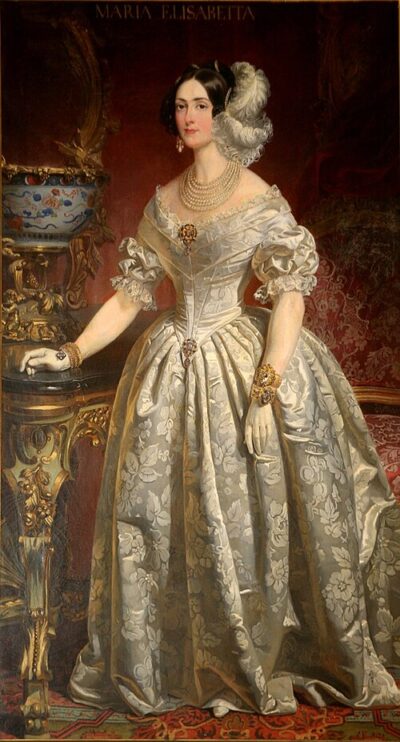
Dame
Dame is a honorific prefix for the rank of an order of knighthood accorded to a woman.
All 3 facts, and where they come from
Facts
3 facts · 0 confirmed by two sources · 0 cited · 3 from one source
Where this comes from
Papalocal keeps its own record. It started from these sources; what each one said is kept here as it was copied, so a change on their side never changes this page by itself. Tap one to read its version.
What Wikidata says · copied November 18, 2026 · revision 2536770124
- Described as
- honorific prefix for the rank of an order of knighthood accorded to a woman
- Other names
- Damehood
- What it is
- title of honor; chivalric order degree; honorific prefix
- Wikipedias with a page
- 29
Wikidata item Q901407 (wikidata.org/wiki/Q901407), public domain (CC0). Copied 2026-11-18.
What Wikipedia says · copied November 18, 2026 · revision 1381955391
Dame is a traditionally British honorific title given to women who have been admitted to certain orders of chivalry. It is the female equivalent of Sir, the title used by knights. Baronetesses in their own right also use the title Dame.
A woman appointed to the grades of Dame Commander or Dame Grand Cross of the Order of Saint John, the Order of the Holy Sepulchre, the Order of the Bath, the Order of Saint Michael and Saint George, the Royal Victorian Order, or the Order of the British Empire becomes a dame. A Central European order in which female members receive the rank of Dame is the Order of Saint George. Since there is no female equivalent to a Knight Bachelor, women are always appointed to an order of chivalry. Women who are appointed to the Order of the Garter or the Order of the Thistle are given the title of Lady rather than Dame.
Women receive all their honours in the same fashion as men receiving decorations or medals, even if they are receiving a damehood, so there is no female word equivalent of being "knighted".
From the Wikipedia article “Dame” (en.wikipedia.org/wiki/Dame), by its contributors, under CC BY-SA 4.0 (creativecommons.org/licenses/by-sa/4.0/). Copied 2026-11-18; not changed.
Confirmed Two sources agree. Cited One source, and it names where it got it. One source One source, without a reference of its own. Sources disagree The sources disagree. We show the best-supported value and keep theirs below.