Darkwing Duck
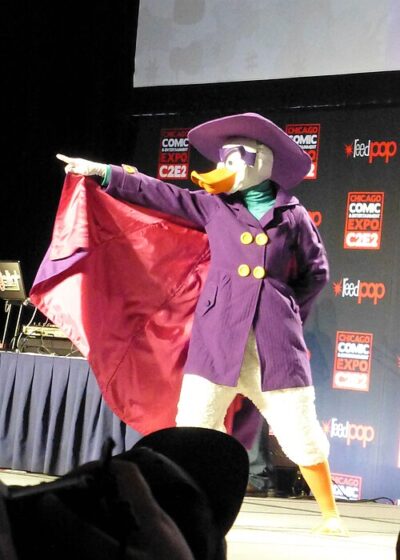
Darkwing Duck is an American animated television series from 1991–1992. It was created by Tad Stones.
- Created by
- Tad Stones
- Genre
- children's television series
- Country of origin
- United States
All 11 facts, and where they come from
Facts
11 facts · 0 confirmed by two sources · 0 cited · 11 from one source
Where this comes from
Papalocal keeps its own record. It started from these sources; what each one said is kept here as it was copied, so a change on their side never changes this page by itself. Tap one to read its version.
What Wikidata says · copied November 17, 2026 · revision 2558494656
- Described as
- American animated television series from 1991–1992
- What it is
- animated television series
- Created by
- Tad Stones
- Produced by
- Tad Stones · 1 reference
- Genre
- children's television series; fantasy television series; comedy television series; superhero television series
- Original language
- English
- Country of origin
- United States
- Comes after
- DuckTales
- Followed by
- Quack Pack · 1 reference
- Wikipedias with a page
- 33
Wikidata item Q383914 (wikidata.org/wiki/Q383914), public domain (CC0). Copied 2026-11-17.
What Wikipedia says · copied November 17, 2026 · revision 1384075052
Darkwing Duck is an American animated superhero comedy television series produced by Walt Disney Television Animation that first ran from 1991 to 1992 on both the syndicated programming block The Disney Afternoon and Saturday mornings on ABC. A total of ninety-one episodes were aired. It features the adventures of Darkwing Duck, who is the superheroic alter-ego of ordinary suburban duck Drake Mallard.
As of 2026, a reboot of the series has been ordered for Disney+, with older characters. Mark Hamill will take over the role of Darkwing Duck.
From the Wikipedia article “Darkwing Duck” (en.wikipedia.org/wiki/Darkwing_Duck), by its contributors, under CC BY-SA 4.0 (creativecommons.org/licenses/by-sa/4.0/). Copied 2026-11-17; not changed.
Confirmed Two sources agree. Cited One source, and it names where it got it. One source One source, without a reference of its own. Sources disagree The sources disagree. We show the best-supported value and keep theirs below.
Picture: GabboT, via Wikimedia Commons · CC BY-SA 2.0