Darwin–Fowler method
Darwin–Fowler method is a Method for deriving the distribution functions with mean probability.
All 3 facts, and where they come from
Facts
3 facts · 0 confirmed by two sources · 0 cited · 3 from one source
Where this comes from
Papalocal keeps its own record. It started from these sources; what each one said is kept here as it was copied, so a change on their side never changes this page by itself. Tap one to read its version.
What Wikidata says · copied November 18, 2026 · revision 1926546105
- Described as
- Method for deriving the distribution functions with mean probability
- What it is
- theory
- Named after
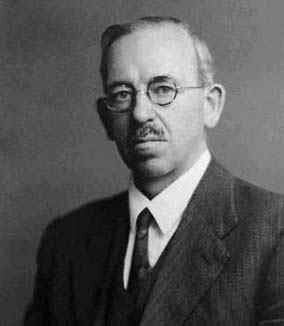
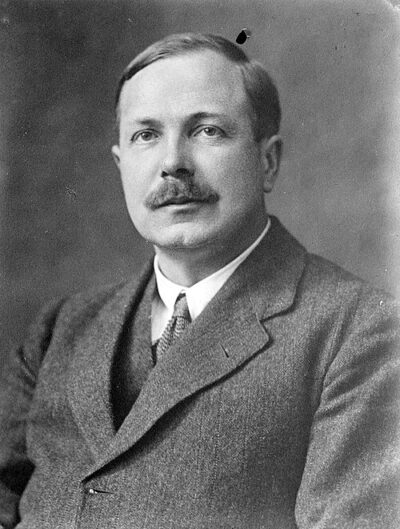
- Ralph H. Fowler; Charles Galton Darwin
- Wikipedias with a page
- 2
Wikidata item Q28455388 (wikidata.org/wiki/Q28455388), public domain (CC0). Copied 2026-11-18.
What Wikipedia says · copied November 18, 2026 · revision 1344658711
In statistical mechanics, the Darwin–Fowler method is used for deriving distribution functions with mean probability. It was developed by Charles Galton Darwin and Ralph H. Fowler in 1922–1923.
Distribution functions are used in statistical physics to estimate the mean number of particles occupying an energy level (hence also called occupation numbers). These distributions are mostly derived as those numbers for which the system under consideration is in its state of maximum probability. But one really requires average numbers. These average numbers can be obtained by the Darwin–Fowler method. Of course, for systems in the thermodynamic limit (large number of particles), as in statistical mechanics, the results are the same as with maximization.
From the Wikipedia article “Darwin–Fowler method” (en.wikipedia.org/wiki/Darwin–Fowler_method), by its contributors, under CC BY-SA 4.0 (creativecommons.org/licenses/by-sa/4.0/). Copied 2026-11-18; not changed.
Confirmed Two sources agree. Cited One source, and it names where it got it. One source One source, without a reference of its own. Sources disagree The sources disagree. We show the best-supported value and keep theirs below.