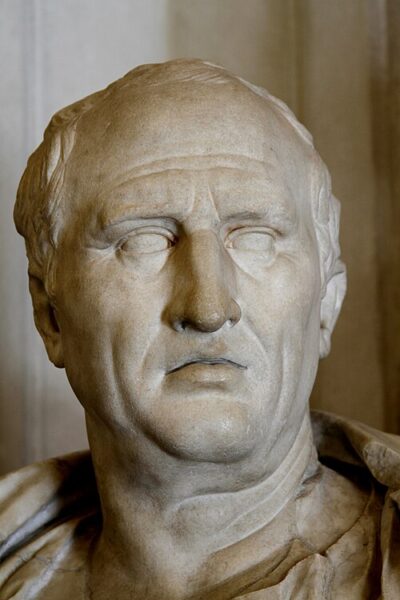
De Officiis
De Officiis is a philosophical work by Cicero. It came out in -46.
- Published
- 46 BC
- Written by
- Cicero
- Genre
- epistolary fiction
- Country of origin
- Roman Republic
All 7 facts, and where they come from
Facts
7 facts · 0 confirmed by two sources · 2 cited · 5 from one source
Where this comes from
Papalocal keeps its own record. It started from these sources; what each one said is kept here as it was copied, so a change on their side never changes this page by itself. Tap one to read its version.
What Wikidata says · copied November 17, 2026 · revision 2465618452
- Described as
- philosophical work by Cicero
- Other names
- On Duties, On Obligations, Cic. Off.
- What it is
- written work
- Written by
- Cicero · 1 reference
- Genre
- epistolary fiction; essay
- Published
- 46 BC
- Language
- Classical Latin · 1 reference
- Country of origin
- Roman Republic · 1 reference
- Wikipedias with a page
- 28
Wikidata item Q1180721 (wikidata.org/wiki/Q1180721), public domain (CC0). Copied 2026-11-17.
What Wikipedia says · copied November 17, 2026 · revision 1384238431
De Officiis (On Duties, On Obligations, or On Moral Responsibilities) is a 44 BC treatise by Marcus Tullius Cicero divided into three books, in which Cicero expounds his conception of the best way to live, behave, and observe moral obligations. The posthumously published work discusses what is honorable (Book I), what is to one's advantage (Book II), and what to do when the honorable and private gain apparently conflict (Book III). For the first two books Cicero was dependent on the Stoic philosopher Panaetius, but wrote more independently for the third book.
From the Wikipedia article “De Officiis” (en.wikipedia.org/wiki/De_Officiis), by its contributors, under CC BY-SA 4.0 (creativecommons.org/licenses/by-sa/4.0/). Copied 2026-11-17; not changed.
Confirmed Two sources agree. Cited One source, and it names where it got it. One source One source, without a reference of its own. Sources disagree The sources disagree. We show the best-supported value and keep theirs below.
Picture: Wikimedia Commons: Tommaso Baldinotti of Pistoia - Leaf from Opera Philosophica - Walters W3641R - Open Obverse.jpg · See Commons file page