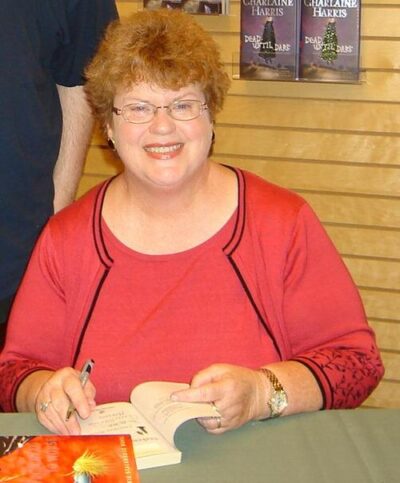
Dead Until Dark
Dead Until Dark is a 2001 novel by Charlaine Harris. It is part of The Southern Vampire Mysteries.
- Published
- May 1, 2001
- Written by
- Charlaine Harris
- Genre
- horror fiction
- Country of origin
- United States
All 12 facts, and where they come from
Facts
12 facts · 0 confirmed by two sources · 1 cited · 11 from one source
Where this comes from
Papalocal keeps its own record. It started from these sources; what each one said is kept here as it was copied, so a change on their side never changes this page by itself. Tap one to read its version.
What Wikidata says · copied November 17, 2026 · revision 2500453106
- Described as
- 2001 novel by Charlaine Harris
- What it is
- literary work
- Written by
- Charlaine Harris · 1 reference
- Publisher
- Ace Books
- Genre
- horror fiction; romantic fiction; vampire fiction; crime fiction
- Published
- May 1, 2001
- Language
- English
- Country of origin
- United States
- Part of the series
- The Southern Vampire Mysteries
- Followed by
- Living Dead in Dallas
- Wikipedias with a page
- 9
Wikidata item Q2659748 (wikidata.org/wiki/Q2659748), public domain (CC0). Copied 2026-11-17.
What Wikipedia says · copied November 17, 2026 · revision 1384325951
Dead Until Dark, published in 2001, is the first novel in Charlaine Harris' series The Southern Vampire Mysteries. It was adapted into True Blood's first season.
Like the rest of the series, Dead Until Dark is narrated by Sookie Stackhouse, a telepathic waitress from the small fictional Louisiana town of Bon Temps, not far from the non-fictional town of Shreveport. It is set during the early 2000s, approximately the same time as the book's publication.
From the Wikipedia article “Dead Until Dark” (en.wikipedia.org/wiki/Dead_Until_Dark), by its contributors, under CC BY-SA 4.0 (creativecommons.org/licenses/by-sa/4.0/). Copied 2026-11-17; not changed.
Confirmed Two sources agree. Cited One source, and it names where it got it. One source One source, without a reference of its own. Sources disagree The sources disagree. We show the best-supported value and keep theirs below.