Declaration of Independence
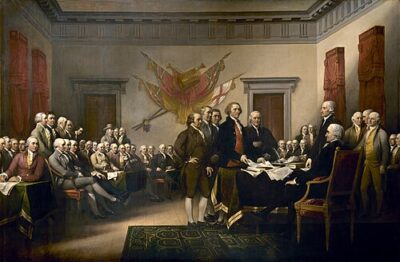
Declaration of Independence is a painting by John Trumbull in the U.S. Capitol.
- Came out
- 19th century
- Created by
- John Trumbull
- Genre
- history painting
- Country of origin
- United States
All 5 facts, and where they come from
Facts
5 facts · 0 confirmed by two sources · 1 cited · 4 from one source
Where this comes from
Papalocal keeps its own record. It started from these sources; what each one said is kept here as it was copied, so a change on their side never changes this page by itself. Tap one to read its version.
What Wikidata says · copied November 17, 2026 · revision 2570232776
- Described as
- painting by John Trumbull in the U.S. Capitol
- Other names
- The Declaration of Independence
- What it is
- painting
- Created by
- John Trumbull
- Genre
- history painting
- Country of origin
- United States
- Came out
- 19th century · 1 reference
- Wikipedias with a page
- 17
Wikidata item Q3173195 (wikidata.org/wiki/Q3173195), public domain (CC0). Copied 2026-11-17.
What Wikipedia says · copied November 17, 2026 · revision 1385732112
Declaration of Independence is a 12-by-18-foot (3.7 by 5.5 m) oil-on-canvas painting by the American artist John Trumbull depicting the presentation of the draft of the Declaration of Independence to Congress. It was based on a much smaller version of the same scene, presently held by the Yale University Art Gallery. Trumbull painted many of the figures in the picture from life, and visited Independence Hall to depict the chamber where the Second Continental Congress met. The oil-on-canvas work was commissioned in 1817, purchased in 1819, and placed in the United States Capitol rotunda in 1826.
The painting is sometimes incorrectly described as depicting the signing of the Declaration of Independence. The painting shows the five-man drafting committee presenting their draft of the Declaration to the Congress, an event that took place on June 28, 1776, and not the signing of the famous copy, which took place mainly on August 2.
The painting shows 42 of the 56 signers of the Declaration; Trumbull originally intended to include all 56 signers but was unable to obtain likenesses for all of them. He also depicted several participants in the debate who did not sign the document, including John Dickinson, who declined to sign. Trumbull had no portrait of Benjamin Harrison V to work with, but his son Benjamin Harrison VI was said to resemble his father, so Trumbull painted him instead. Similarly, Trumbull painted Rufus Hopkins, who resembled his father Stephen Hopkins, for whom no portrait was available. As the Declaration was debated and signed over a period of time when membership in Congress changed, the men featured in the painting never were in the same room at the same time.
From the Wikipedia article “Declaration of Independence (painting)” (en.wikipedia.org/wiki/Declaration_of_Independence_(painting)), by its contributors, under CC BY-SA 4.0 (creativecommons.org/licenses/by-sa/4.0/). Copied 2026-11-17; not changed.
Confirmed Two sources agree. Cited One source, and it names where it got it. One source One source, without a reference of its own. Sources disagree The sources disagree. We show the best-supported value and keep theirs below.
Picture: John Trumbull, via Wikimedia Commons · Public domain