

Democratic Progressive Party
The Democratic Progressive Party is a Taiwanese political party. It was founded in 1986. Its headquarters are in Zhongzheng District. It stands for liberalism, progressivism and anti-communism.
- Country
- Taiwan
- Founded
- September 28, 1986
- Ideology
- liberalism
- Chair
- Lai Ching-te (2023–)
All 11 facts, and where they come from
Facts
11 facts · 0 confirmed by two sources · 0 cited · 11 from one source
Where this comes from
Papalocal keeps its own record. It started from these sources; what each one said is kept here as it was copied, so a change on their side never changes this page by itself. Tap one to read its version.
What Wikidata says · copied November 17, 2026 · revision 2561449779
- Described as
- Taiwanese political party
- Other names
- DPP, Democratic Progressive Party (Taiwan)
- What it is
- political party
- Founded
- September 28, 1986
- Headquarters
- Zhongzheng District
- Country
- Taiwan
- Chair
- Tsai Ing-wen (3 times) (2008–2022); Chiang Peng-chien (1986–1987)
- Ideology
- liberalism; progressivism; anti-communism; Taiwanese nationalism
- Official website
- https://www.dpp.org.tw/
- Wikipedias with a page
- 46
Wikidata item Q903822 (wikidata.org/wiki/Q903822), public domain (CC0). Copied 2026-11-17.
What Wikipedia says · copied November 17, 2026 · revision 1385981662
The Democratic Progressive Party (DPP) is a Taiwanese nationalist political party in Taiwan. As the dominant party in the Pan-Green Coalition, one of the two main political camps in Taiwan, the DPP is currently the ruling party in Taiwan, leading a minority government that controls the presidency and the central government.
Founded in 1986 by Hsu Hsin-liang, Roger Hsieh and Lin Shui-chuan, a year prior to the end of martial law, the DPP is one of two major parties in Taiwan, the other being the Kuomintang (KMT), a Chinese nationalist party previously ruling the country as a one-party state, and its smaller allies in the Pan-Blue Coalition. It has traditionally been associated with a strong advocacy of human rights, emerging against the authoritarian White Terror that was initiated by the KMT, as well as the promotion of Taiwanese nationalism and identity. Lai Ching-te has been chairperson of the DPP since 2023; he also serves as the incumbent President and is the third member of the DPP to hold the presidency; he succeeded fellow DPP member Tsai Ing-wen in May 2024.
The DPP is a longtime member of Liberal International and a founding member of the Council of Asian Liberals and Democrats. It represented Taiwan in the Unrepresented Nations and Peoples Organization (UNPO). The DPP is widely classified as socially liberal, having been founded as a party for human rights, including factions within the party supporting same-sex marriage and other LGBT rights. On foreign policy, the DPP is more willing to increase military expenditures to prevent military intimidation from the People's Republic of China (PRC) owing to the ambiguous political status of Taiwan. It favors closer ties with democratic nations such as Japan and the United States, as well as the nations of ASEAN as part of its New Southbound Policy.
In its policy on cross-strait relations, the DPP as a ruling party chooses to keep the status quo of Taiwan, instead of approaching de jure independence, despite being a pro-independence group in its party platform. The party considers that Taiwan is already a sovereign country under the name "Republic of China" and not subordinate to the PRC. The DPP is frequently accused by the PRC government of being a primary force in Taiwan to "prevent the Chinese nation from achieving complete reunification" and "halt the process of national rejuvenation" due to the party's advocacy of Taiwanese nationalism, Taiwanese self-determination, and its firm opposition to "One China", including the alleged "1992 Consensus" narratives by both the PRC and the KMT.
From the Wikipedia article “Democratic Progressive Party” (en.wikipedia.org/wiki/Democratic_Progressive_Party), by its contributors, under CC BY-SA 4.0 (creativecommons.org/licenses/by-sa/4.0/). Copied 2026-11-17; not changed.
Confirmed Two sources agree. Cited One source, and it names where it got it. One source One source, without a reference of its own. Sources disagree The sources disagree. We show the best-supported value and keep theirs below.
Picture: 民主進步黨、Smallabc改色, via Wikimedia Commons · Public domain
People connected 10
Party members
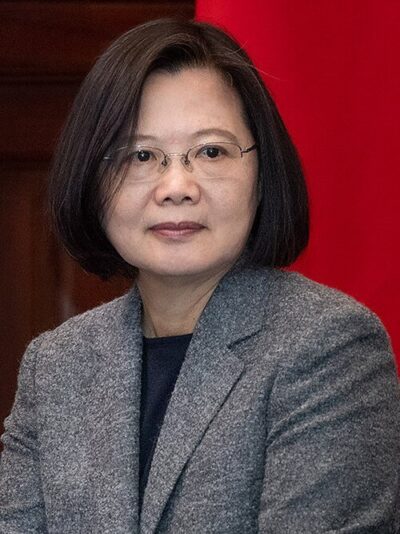 Tsai Ing-wen (2004–)14th and 15th President of Republic of China (Taiwan)
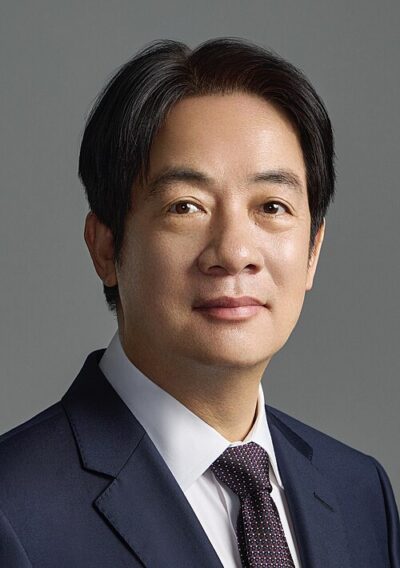 Lai Ching-te (1994–)President of Taiwan (ROC) since 2024
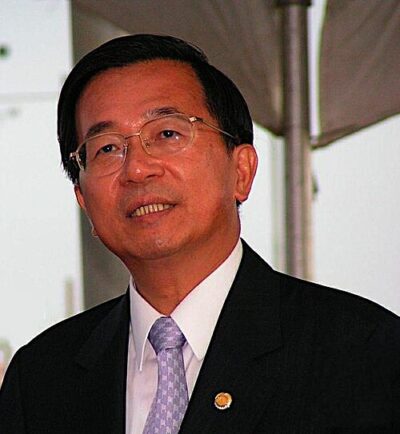 Chen Shui-bian (1987–)10th and 11th President of Republic of China(Taiwan) (2000–2008)
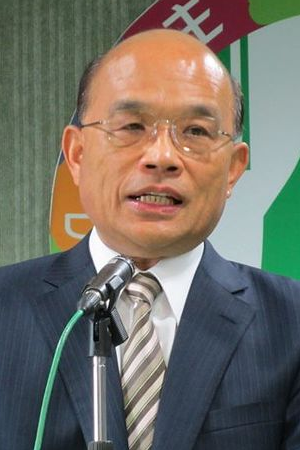 Su Tseng-chang (1986–)Taiwanese politician
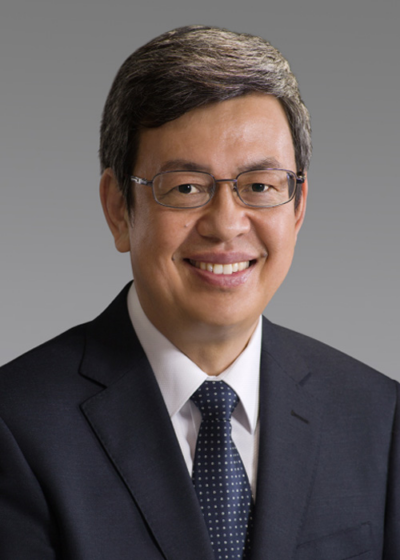 Chen Chien-jen (2022–)Epidemiologist and former Vice President of Taiwan
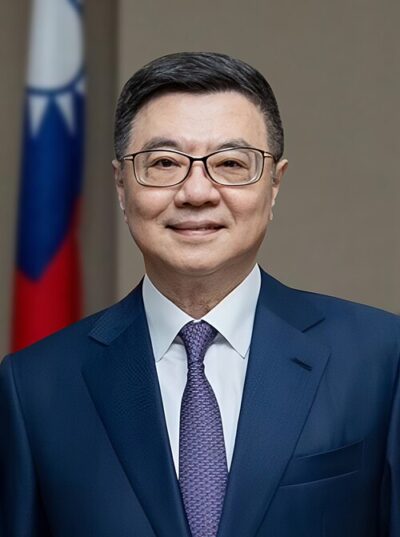 Cho Jung-taiPremier of Taiwan since 2024
 Yang Chuan-kwangTaiwanese decathlete (1933–2007)
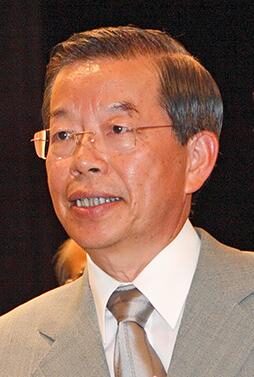 Frank HsiehTaiwanese politician (born 1946)
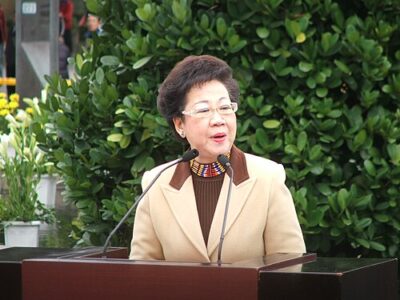 Annette LuVice President of Taiwan (2000–2008)
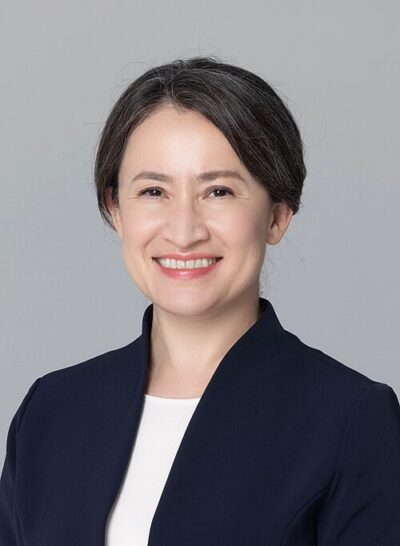 Hsiao Bi-khimVice President of Taiwan since 2024
