Democratic Unionist Party
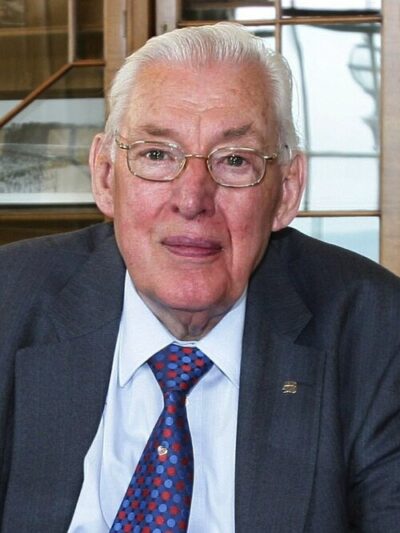
The Democratic Unionist Party is a right-wing unionist party of Northern Ireland. It was founded in 1971 by Ian Paisley. Its headquarters are in Belfast. It stands for unionism in the United Kingdom, British nationalism and national conservatism.
- Country
- United Kingdom
- Founded
- September 30, 1971
- Ideology
- unionism in the United Kingdom
- Chair
- Maurice Morrow
All 12 facts, and where they come from
Facts
12 facts · 0 confirmed by two sources · 0 cited · 12 from one source
Where this comes from
Papalocal keeps its own record. It started from these sources; what each one said is kept here as it was copied, so a change on their side never changes this page by itself. Tap one to read its version.
What Wikidata says · copied November 17, 2026 · revision 2516917653
- Described as
- right-wing unionist party of Northern Ireland
- Other names
- DUP
- What it is
- political party
- Comes after
- Protestant Unionist Party
- Founded
- September 30, 1971
- Founded by
- Ian Paisley
- Headquarters
- Belfast
- Country
- United Kingdom
- Chair
- Maurice Morrow
- Ideology
- unionism in the United Kingdom; British nationalism; national conservatism; social conservatism
- Official website
- https://mydup.com/
- Wikipedias with a page
- 46
Wikidata item Q215519 (wikidata.org/wiki/Q215519), public domain (CC0). Copied 2026-11-17.
What Wikipedia says · copied November 17, 2026 · revision 1385896998
The Democratic Unionist Party (DUP) is a unionist, loyalist, British nationalist and national conservative political party in Northern Ireland. It was founded in 1971 during the Troubles by Ian Paisley, who led the party until 2008. Led by Gavin Robinson, it is the second-largest party in the Northern Ireland Assembly, and won five seats in the House of Commons of the United Kingdom at the 2024 election. The party has been mostly described as right-wing and socially conservative, being anti-abortion and opposing same-sex marriage. The DUP sees itself as defending Britishness and Ulster Protestant culture against Irish nationalism and republicanism. It is also Eurosceptic and supported Brexit.
The DUP evolved from the Protestant Unionist Party and has historically strong links to the Free Presbyterian Church of Ulster, the church Paisley founded. During the Troubles, the DUP opposed sharing power with Irish nationalists or republicans as a means of resolving the conflict, and likewise rejected attempts to involve the Republic of Ireland in Northern Irish affairs. It campaigned against the Sunningdale Agreement of 1973, the Anglo-Irish Agreement of 1985, and the Good Friday Agreement of 1998. In the 1980s, the DUP was involved in setting up the loyalist paramilitary movements Third Force and Ulster Resistance, the latter of which helped smuggle a large shipment of weapons into Northern Ireland.
For the first three decades of the DUP's history, the Ulster Unionist Party was the largest unionist party in Northern Ireland; however, by 2004, the DUP had overtaken the UUP in terms of seats in both the Northern Ireland Assembly and the UK House of Commons. In 2006, the DUP co-signed the St Andrews Agreement and the following year agreed to enter into power-sharing devolved government with Sinn Féin, who agreed to support the Police Service, courts, and rule of law. Paisley became joint First Minister of Northern Ireland. However, the DUP's only Member of the European Parliament (MEP), Jim Allister, and seven DUP councillors left the party in protest, founding the Traditional Unionist Voice.
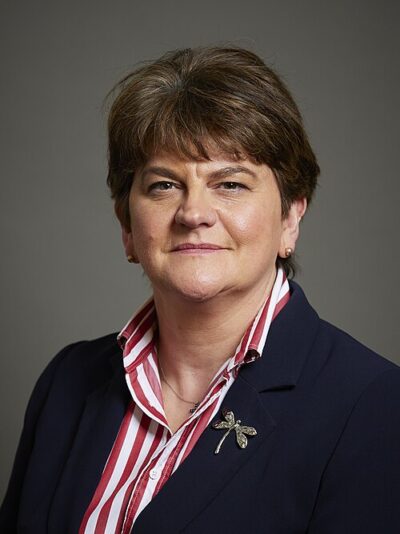
Ian Paisley was succeeded as DUP leader and First Minister by Peter Robinson (2008–2015), then by Arlene Foster (2015–2021). After Foster was ousted, Edwin Poots briefly became leader and nominated Paul Givan as First Minister, but was himself forced to step down after three weeks. In June 2021, he was succeeded by Jeffrey Donaldson. In protest against the Northern Ireland Protocol, Givan resigned as First Minister in February 2022, collapsing the Northern Ireland Executive. On 30 January 2024, Donaldson announced that the DUP had agreed a deal with the UK government that resulted in power-sharing being restored. Donaldson resigned as leader on 29 March 2024 after being charged with historical child sex offences, with the party's deputy leader, Gavin Robinson, being appointed as interim leader and later confirmed as party leader in May 2024.
From the Wikipedia article “Democratic Unionist Party” (en.wikipedia.org/wiki/Democratic_Unionist_Party), by its contributors, under CC BY-SA 4.0 (creativecommons.org/licenses/by-sa/4.0/). Copied 2026-11-17; not changed.
Confirmed Two sources agree. Cited One source, and it names where it got it. One source One source, without a reference of its own. Sources disagree The sources disagree. We show the best-supported value and keep theirs below.