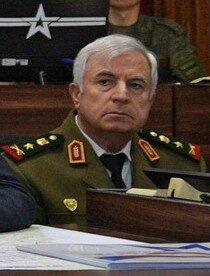
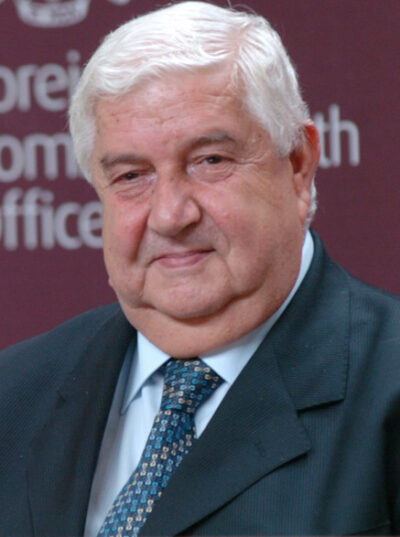
Deputy Prime Minister of Syria
Deputy Prime Minister of Syria is a Senior member of the Syrian government (1948–2025).
All 3 facts, and where they come from
Facts
3 facts · 0 confirmed by two sources · 0 cited · 3 from one source
Where this comes from
Papalocal keeps its own record. It started from these sources; what each one said is kept here as it was copied, so a change on their side never changes this page by itself. Tap one to read its version.
What Wikidata says · copied November 17, 2026 · revision 2386675017
- Described as
- Senior member of the Syrian government (1948–2025)
- What it is
- position
- Country
- Syria
- Office of
- Syria
- Wikipedias with a page
- 4
Wikidata item Q105821094 (wikidata.org/wiki/Q105821094), public domain (CC0). Copied 2026-11-17.
What Wikipedia says · copied November 17, 2026 · revision 1373662683
The deputy prime minister of Syria (Arabic: نايب رئيس الوزراء في سوريا, romanized: Nayib Raʾīs al-wuzarāʾ fī Sūriyā), officially the vice president of the Council of Ministers of the Syrian Arab Republic, was a position in the Council of Ministers of Syria.
The deputy prime minister was the second highest-ranking member of the Council of Ministers, after the prime minister. In the previous semi-presidential system used under both Ba'athist Syria and the Syrian caretaker government, the prime minister was treated as the "first among equals" in the cabinet; the position of deputy prime minister was used to bring political stability and strength within a government or in times of national emergency when a proper chain of command was necessary. The post became vacant on 28 April 2022 and was formally abolished following the establishment of the Syrian transitional government on 29 March 2025.
From the Wikipedia article “Deputy Prime Minister of Syria” (en.wikipedia.org/wiki/Deputy_Prime_Minister_of_Syria), by its contributors, under CC BY-SA 4.0 (creativecommons.org/licenses/by-sa/4.0/). Copied 2026-11-17; not changed.
Confirmed Two sources agree. Cited One source, and it names where it got it. One source One source, without a reference of its own. Sources disagree The sources disagree. We show the best-supported value and keep theirs below.