

Description of Africa
Description of Africa is a 1550 geographical work by Leo Africanus. It was written by Giovanni Battista Ramusio.
- Came out
- 1550
- Written by
- Leo Africanus
- Genre
- travel book
All 8 facts, and where they come from
Facts
8 facts · 0 confirmed by two sources · 0 cited · 8 from one source
Where this comes from
Papalocal keeps its own record. It started from these sources; what each one said is kept here as it was copied, so a change on their side never changes this page by itself. Tap one to read its version.
What Wikidata says · copied November 17, 2026 · revision 2455626293
- Described as
- 1550 geographical work by Leo Africanus
- Other names
- Della descrittione dell’Africa et delle cose notabili che iui sono
- What it is
- written work
- Written by
- Leo Africanus; Giovanni Battista Ramusio
- Genre
- travel book; treatise · 1 reference
- Language
- Italian; Arabic
- Came out
- 1550
- Wikipedias with a page
- 8
Wikidata item Q18205780 (wikidata.org/wiki/Q18205780), public domain (CC0). Copied 2026-11-17.
What Wikipedia says · copied November 17, 2026 · revision 1358841135
Description of Africa was taken largely from the firsthand geographical work Cosmographia et geographia de Affrica completed by Leo Africanus in 1526 and published under the title Della descrittione dell’Africa et delle cose notabili che ivi sono by Giovanni Battista Ramusio in his collection of travellers' accounts Delle navigationi e viaggi in Venice in 1550. It contained the first detailed descriptions published in Europe of the Barbary Coast (modern Morocco, Algeria, and Tunisia) and the gold-trading kingdoms of west-central Africa. The book was dictated in Italian by Leo Africanus, the famed Moorish traveler and merchant who had been captured by pirates and sold as a slave. Presented, along with his book, to Pope Leo X, he was baptized and freed. Leo, whose name he took in baptism, suggested that he recast his Arabic work in Italian; it was completed in 1526. It was republished repeatedly by Ramusio in his Delle navigationi e viaggi, translated into French and into Latin for the erudite, both in 1556.
The Descrittione is in nine books, an introductory book and an appendix on rivers and fauna and flora, with seven books between, each describing a kingdom: the kingdoms of Marrakesh, Fez, Tlemcen and Tunis, and the regions of Numidia, the sub-Saharan regions, and Egypt. The work circulated in manuscript form for decades. It was in Ramusio's manuscript that Pietro Bembo read it and was astonished: "I cannot imagine how a man could have so much detailed information about these things", he wrote to a correspondent, 2 April 1545.
The book's importance stemmed from its accuracy at a time when the area was little known to Europeans, and its publication at precisely the moment when Latin Christian power was on a collision course with the Ottoman Empire in the Mediterranean and Eastern Europe, while at the same time Western Africa was becoming more accessible to Europeans.
The book was an enormous success in Europe, and was translated into many other languages, remaining a definitive reference work for decades (and to some degree, centuries) afterwards. In English it was served by John Pory, whose translation appeared in 1600 under the title A Geographical Historie of Africa, Written in Arabicke and Italian by Iohn Leo a More... in which form Shakespeare may have seen it and reworked hints in creating the title character of his Othello (ca. 1603).
A twentieth-century rediscovery of the originally-dictated manuscript revealed that Ramusio, in smoothing the grammar of Leo Africanus's text had coloured many neutral details, to make it more palatable to Christian European audiences; French and English translators added further embellishments. Modern translations which incorporate this manuscript are thus more true to the original.
From the Wikipedia article “Description of Africa (1550 book)” (en.wikipedia.org/wiki/Description_of_Africa_(1550_book)), by its contributors, under CC BY-SA 4.0 (creativecommons.org/licenses/by-sa/4.0/). Copied 2026-11-17; not changed.
Confirmed Two sources agree. Cited One source, and it names where it got it. One source One source, without a reference of its own. Sources disagree The sources disagree. We show the best-supported value and keep theirs below.
Picture: Wikimedia Commons: LeoAfricanus-JohnPory-GeoHistorieAfrica-1600.jpg · See Commons file page
People connected 2
Known for it
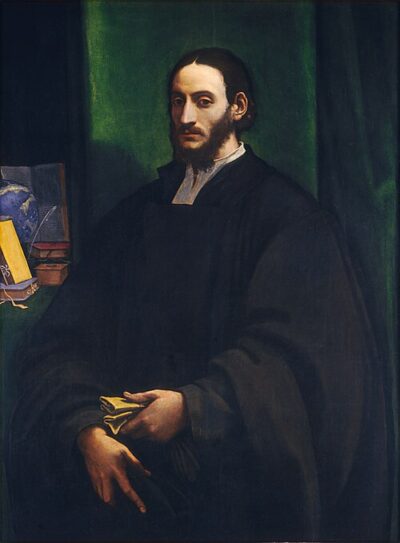 Leo Africanusan Andalusi diplomat and author who is best known for his 1526 book Cosmographia et geographia de Affrica, later published by Giovanni Battista Ramusio as Descrittione dell'Africa in 1550, centered on the geography of the Maghreb and Nile Valley
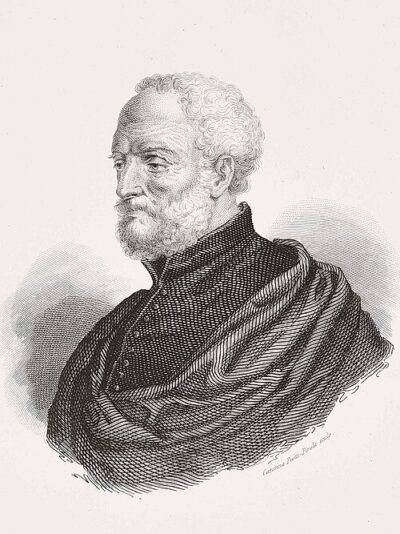 Giovanni Battista RamusioVenetian geographer and writer (1485-1557)
