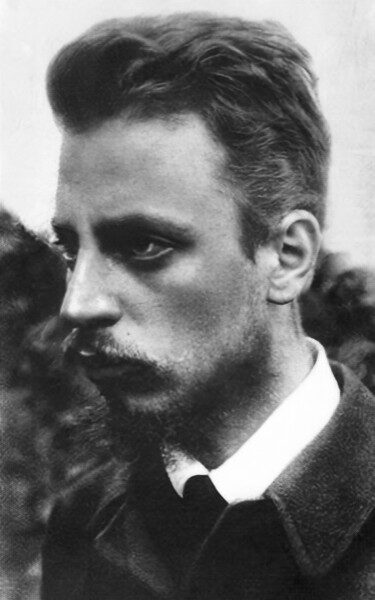
Die Aufzeichnungen des Malte Laurids Brigge
Die Aufzeichnungen des Malte Laurids Brigge is a novel by Rainer Maria Rilke. It came out in 1910. It won the Le Monde's 100 Books of the Century.
- Published
- 1910
- Written by
- Rainer Maria Rilke
- Genre
- autobiographical novel
- Country of origin
- Austria–Hungary
All 11 facts, and where they come from
Facts
11 facts · 0 confirmed by two sources · 0 cited · 11 from one source
Where this comes from
Papalocal keeps its own record. It started from these sources; what each one said is kept here as it was copied, so a change on their side never changes this page by itself. Tap one to read its version.
What Wikidata says · copied November 17, 2026 · revision 2555893189
- Described as
- novel by Rainer Maria Rilke
- Other names
- The Notebook of Malte Laurids Brigge
- What it is
- literary work
- Written by
- Rainer Maria Rilke
- Publisher
- Die Insel
- Genre
- autobiographical novel; autofiction; found manuscript; fictional diary
- Published
- 1910
- Language
- German
- Country of origin
- Austria–Hungary · 1 reference
- Awards
- Le Monde's 100 Books of the Century
- Wikipedias with a page
- 20
Wikidata item Q968544 (wikidata.org/wiki/Q968544), public domain (CC0). Copied 2026-11-17.
What Wikipedia says · copied November 17, 2026 · revision 1384231813
The Notebooks of Malte Laurids Brigge, first published as The Journal of My Other Self, is a 1910 novel by Austrian poet Rainer Maria Rilke. The novel was the only work of prose of considerable length that he wrote and published. It is semiautobiographical and is written in an expressionistic style, with existentialist themes. It was conceptualized and written while Rilke lived in Paris, mainly inspired by Sigbjørn Obstfelder's A Priest's Diary and Jens Peter Jacobsen's Niels Lyhne.
From the Wikipedia article “The Notebooks of Malte Laurids Brigge” (en.wikipedia.org/wiki/The_Notebooks_of_Malte_Laurids_Brigge), by its contributors, under CC BY-SA 4.0 (creativecommons.org/licenses/by-sa/4.0/). Copied 2026-11-17; not changed.
Confirmed Two sources agree. Cited One source, and it names where it got it. One source One source, without a reference of its own. Sources disagree The sources disagree. We show the best-supported value and keep theirs below.