

Die Brücke
Die Brücke is a German expressionist artist group. It was founded in 1905 by Fritz Bleyl, Erich Heckel and Ernst Ludwig Kirchner.
- Founded
- June 7, 1905
- Founded by
- Fritz Bleyl
- Country
- Germany
All 13 facts, and where they come from
Facts
13 facts · 0 confirmed by two sources · 0 cited · 13 from one source
Where this comes from
Papalocal keeps its own record. It started from these sources; what each one said is kept here as it was copied, so a change on their side never changes this page by itself. Tap one to read its version.
What Wikidata says · copied November 17, 2026 · revision 2556384128
- Described as
- German expressionist artist group
- Other names
- The Bridge
- What it is
- art group; art movement
- Country of origin
- German Empire
- Followed by
- Dresdner Sezession
- Founded
- June 7, 1905
- Ended
- 1913
- Founded by
- Fritz Bleyl; Erich Heckel; Ernst Ludwig Kirchner; Karl Schmidt-Rottluff
- Located in
- Dresden
- Country
- Germany
- Field
- visual arts
- Wikipedias with a page
- 46
Wikidata item Q152778 (wikidata.org/wiki/Q152778), public domain (CC0). Copied 2026-11-17.
What Wikipedia says · copied November 17, 2026 · revision 1382390748
Die Brücke (German pronunciation: [diː ˈbʁʏkə] , "The Bridge"), also known as Künstlergruppe Brücke or KG Brücke, was a group of German expressionist artists formed in Dresden in 1905. The founding members were Fritz Bleyl, Erich Heckel, Ernst Ludwig Kirchner, and Karl Schmidt-Rottluff. Later members were Emil Nolde, Max Pechstein, and Otto Mueller. The seminal group had a major impact on the evolution of modern art in the 20th century and the creation of expressionism. The group came to an end around 1913. The Brücke Museum in Berlin was named after the group.
The Brücke is sometimes compared to the roughly contemporary French group of the Fauves. Both movements shared interests in primitivist art and in the expressing of extreme emotion through high-keyed colors that were very often non-naturalistic. Both movements employed a drawing technique that was crude, and both groups shared an antipathy to complete abstraction. The Brücke artists' emotionally agitated paintings of city streets and sexually charged events transpiring in country settings made their French counterparts, the Fauves, seem tame by comparison.
From the Wikipedia article “Die Brücke” (en.wikipedia.org/wiki/Die_Brücke), by its contributors, under CC BY-SA 4.0 (creativecommons.org/licenses/by-sa/4.0/). Copied 2026-11-17; not changed.
Confirmed Two sources agree. Cited One source, and it names where it got it. One source One source, without a reference of its own. Sources disagree The sources disagree. We show the best-supported value and keep theirs below.
Picture: Wikimedia Commons: Ernst Ludwig Kirchner - KG Brücke (Ausstellungsplakat der Galerie Arnold in Dresden).jpeg · See Commons file page
People connected 6
Members
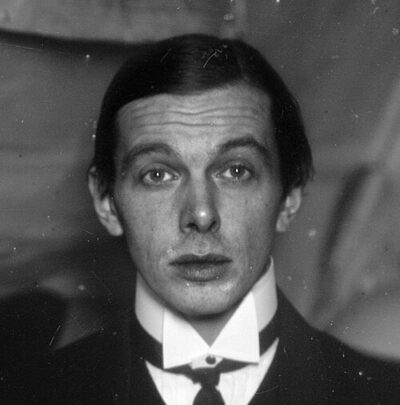 Ernst Ludwig Kirchner (1905–)German painter, sculptor, engraver and printmaker (1880–1938)
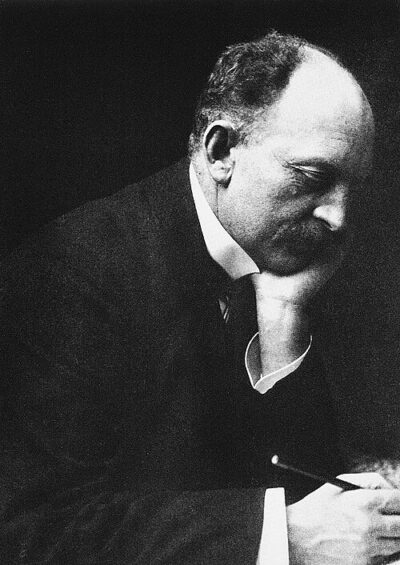 Emil Nolde (1906–)German artist (1867–1956)
 Karl Schmidt-Rottluff (1905–)German artist (1884–1976)
 Erich Heckel (1905–)German artist (1883–1970)
 Max Pechstein (1906–)German artist (1881–1955)
 Otto Mueller (1910–)German painter and printmaker of the expressionist movement (1874–1930)
