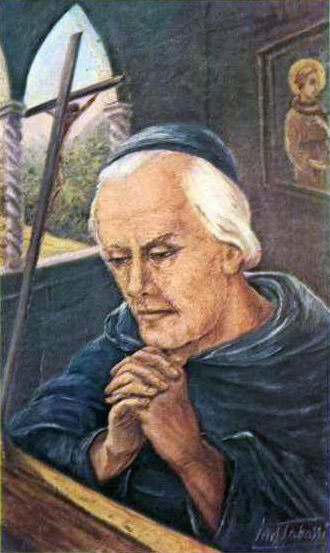
Dies Irae
Dies Irae is a Latin sequence, liturgical hymn. It was written by Thomas of Celano.
- Written by
- Thomas of Celano
- Created by
- Thomas of Celano
All 4 facts, and where they come from
Facts
4 facts · 0 confirmed by two sources · 0 cited · 4 from one source
Where this comes from
Papalocal keeps its own record. It started from these sources; what each one said is kept here as it was copied, so a change on their side never changes this page by itself. Tap one to read its version.
What Wikidata says · copied November 17, 2026 · revision 2563544132
- Described as
- Latin sequence, liturgical hymn
- What it is
- sequence · 1 reference
- Written by
- Thomas of Celano
- Created by
- Thomas of Celano
- Language
- Latin
- Wikipedias with a page
- 48
Wikidata item Q83771 (wikidata.org/wiki/Q83771), public domain (CC0). Copied 2026-11-17.
What Wikipedia says · copied November 17, 2026 · revision 1383574175
"Dies irae" (Ecclesiastical Latin: [ˈdi.es ˈi.re]; "the Day of Wrath") is a Latin sequence attributed to either Thomas of Celano of the Franciscans (1200–1265) or to Latino Malabranca Orsini (d. 1294), lector at the Dominican studium at Santa Sabina, the forerunner of the Pontifical University of Saint Thomas Aquinas (the Angelicum) in Rome. The sequence dates from the 13th century at the latest, though it is possible that it is much older, with some sources ascribing its origin to St. Gregory the Great (d. 604), Bernard of Clairvaux (1090–1153), or Bonaventure (1221–1274).
It is a medieval Latin poem characterized by its accentual stress and rhymed lines. The metre is trochaic. The poem describes the Last Judgment, the trumpet summoning souls before the throne of God, where the saved will be delivered and the unsaved cast into eternal flames.
It is best known from its use in the Roman Rite Catholic Requiem Mass (also called the Mass for the Dead or Funeral Mass). An English version is found in various Anglican Communion service books.
The first melody set to these words, a Gregorian chant, is one of the most quoted in musical literature, appearing in the works of many composers. The final couplet, Pie Jesu, has been often reused as an independent song.
From the Wikipedia article “Dies irae” (en.wikipedia.org/wiki/Dies_irae), by its contributors, under CC BY-SA 4.0 (creativecommons.org/licenses/by-sa/4.0/). Copied 2026-11-17; not changed.
Confirmed Two sources agree. Cited One source, and it names where it got it. One source One source, without a reference of its own. Sources disagree The sources disagree. We show the best-supported value and keep theirs below.
Picture: Wikimedia Commons: Delavigne, Casimir - Dies Iræ de Kosciuszko - 1-1.jpg · See Commons file page