Dom Casmurro
Dom Casmurro is a 1899 novel by Joaquim Maria Machado de Assis. It is part of Realist Trilogy.
- Published
- 1899
- Written by
- Machado de Assis
- Country of origin
- Brazil
All 6 facts, and where they come from
Facts
6 facts · 0 confirmed by two sources · 0 cited · 6 from one source
Where this comes from
Papalocal keeps its own record. It started from these sources; what each one said is kept here as it was copied, so a change on their side never changes this page by itself. Tap one to read its version.
What Wikidata says · copied November 17, 2026 · revision 2550190673
- Described as
- 1899 novel by Joaquim Maria Machado de Assis
- What it is
- literary work
- Written by
- Machado de Assis
- Published
- 1899
- Language
- Portuguese
- Country of origin
- Brazil
- Part of the series
- Realist Trilogy
- Wikipedias with a page
- 16
Wikidata item Q1236531 (wikidata.org/wiki/Q1236531), public domain (CC0). Copied 2026-11-17.
What Wikipedia says · copied November 17, 2026 · revision 1384264124
Dom Casmurro is an 1899 novel written by Brazilian author Joaquim Maria Machado de Assis. Like The Posthumous Memoirs of Brás Cubas and Quincas Borba, both by Machado de Assis, it is widely regarded as a masterpiece of realist literature. It is written as a fictional memoir by a distrusting, jealous husband. The narrator, however, is not a reliable conveyor of the story as it is a dark comedy. Dom Casmurro is considered by critic Afrânio Coutinho "a true Brazilian masterpiece, and perhaps Brazil's greatest representative piece of writing" and "one of the best books ever written in the Portuguese language, if not the best one to date." The author is considered a master of Brazilian literature with a unique style of realism.
Its protagonist is Bento Santiago, the narrator of the story which, told in the first person, aims to "tie together the two ends of life", in other words, to bring together stories from his youth to the days when he is writing the book. Between these two moments, Bento writes about his youthful reminiscences, his life at the seminary, his affair with Capitu and the jealousy that arises from this relationship, which becomes the main plot of the story. Set in Rio de Janeiro during the Second Reign, the novel begins with a recent episode in which the narrator is nicknamed "Dom Casmurro", hence the title of the novel. Machado de Assis wrote it using literary devices such as irony and intertextuality, making references to Schopenhauer and, above all, to Shakespeare's Othello.
Over the years, Dom Casmurro has been the subject of numerous studies, adaptations to other media and interpretations throughout the world, from psychological and psychoanalytical in literary criticism in the 1930s and 1940s, through feminist literary criticism in the 1970s, to sociological in the 1980s and beyond, with its themes of jealousy, Capitu's ambiguity, the moral portrait of the time and the character of the narrator. Credited as a forerunner of Modernism and of ideas later written by the father of psychoanalysis Sigmund Freud, the book influenced writers such as John Barth, Graciliano Ramos and Dalton Trevisan, and is considered by some to be Machado's masterpiece, on a par with The Posthumous Memoirs of Brás Cubas. Dom Casmurro has been translated into several languages and remains one of his most famous books and is considered one of the most fundamental works in all of Brazilian literature.
From the Wikipedia article “Dom Casmurro” (en.wikipedia.org/wiki/Dom_Casmurro), by its contributors, under CC BY-SA 4.0 (creativecommons.org/licenses/by-sa/4.0/). Copied 2026-11-17; not changed.
Confirmed Two sources agree. Cited One source, and it names where it got it. One source One source, without a reference of its own. Sources disagree The sources disagree. We show the best-supported value and keep theirs below.
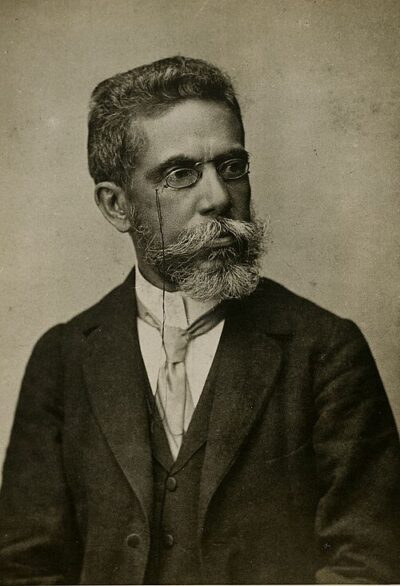
Picture: Wikimedia Commons: DomCasmurroMachadodeAssis.jpg · See Commons file page