Donald Trump 2016 presidential campaign
Donald Trump 2016 presidential campaign is a 2016 United States presidential campaign of Donald Trump. It was founded in 2015. Its headquarters are in Trump Tower.
- Founded
- June 16, 2015
- Headquarters
- Trump Tower
- Country
- United States
All 6 facts, and where they come from
Facts
6 facts · 0 confirmed by two sources · 1 cited · 5 from one source
Where this comes from
Papalocal keeps its own record. It started from these sources; what each one said is kept here as it was copied, so a change on their side never changes this page by itself. Tap one to read its version.
What Wikidata says · copied November 16, 2026 · revision 2565008729
- Described as
- 2016 United States presidential campaign of Donald Trump
- Other names
- Trump 2016, 2016 Trump campaign, Donald Trump presidential campaign, 2016
- What it is
- campaign for the 2016 United States presidential election
- Followed by
- first presidential transition of Donald Trump
- Founded
- June 16, 2015 · 1 reference
- Headquarters
- Trump Tower
- Country
- United States
- Official website
- https://www.donaldjtrump.com/
- Wikipedias with a page
- 18
Wikidata item Q20121517 (wikidata.org/wiki/Q20121517), public domain (CC0). Copied 2026-11-16.
What Wikipedia says · copied November 16, 2026 · revision 1386015702
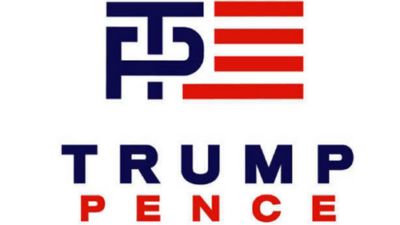
Donald Trump ran a successful campaign for the 2016 U.S. presidential election. He formally announced his campaign on June 16, 2015, at Trump Tower in New York City, initially battling for the Republican Party's nomination. On May 26, 2016, he became the Republican Party's presumptive nominee. Trump was officially nominated on July 19 at the Republican National Convention. He chose Mike Pence, the sitting governor of Indiana, as his vice presidential running mate. On November 8, Trump and Pence were elected president and vice president of the United States.
Trump's populist positions in opposition to illegal immigration and various trade agreements, such as the Trans-Pacific Partnership, earned him support especially among voters who were male, white, blue-collar, working class, and those without college degrees. Many voters in the Rust Belt, who gave Trump the electoral votes needed to win the presidency, switched from supporting Bernie Sanders to Trump after Hillary Clinton won the Democratic nomination.
Many of Trump's remarks were controversial and helped his campaign garner extensive coverage by the mainstream media, trending topics, and social media. Trump's campaign rallies attracted large crowds as well as public controversy. Some of the events were marked by incidents of violence between Trump supporters and protesters, mistreatment of journalists, and disruption by a large group of protesters who effectively shut down a major rally in Chicago. Trump himself was accused of inciting violence at his rallies.
Trump's disdain for political correctness was a staple theme of his campaign and proved popular among his supporters. Many, including some mainstream commentators and some prominent Republicans, viewed him as appealing to racism, a charge that Trump repeatedly denied. Trump's most polarizing and widely reported proposals were about issues of immigration and border security, especially his proposed deportation of all illegal immigrants, the proposed construction of a substantial wall on the Mexico–United States border at Mexico's expense, his false characterizations of many illegal Mexican immigrants as "criminals, drug dealers, rapists, etc.", and a temporary ban on foreign Muslims entering the U.S. After considerable backlash, he later modified the "Trump travel ban" to apply to people originating from countries which he described as having a history of terrorism against the United States or its allies. This was also criticized for excluding countries which the U.S. has significant financial ties with, such as Saudi Arabia.
Opposition to Trump grew during his campaign among both Republicans (who viewed Trump as irrevocably damaging to the party and its chances of winning elections during and after 2016, leading to the coalescence of the Never Trump movement) and Democrats (who decried Trump's anti-immigrant and anti-Muslim policies, his behavior toward critics, his treatment of the media, and his support from the ethno-nationalist alt-right). Although some prominent Republican leaders declined to endorse Trump after he won the Republican nomination, many Republican congress-members showed support for Trump and his policy positions despite major personal or political conflicts with him. Some such supporters of Trump's campaign were accused, by both conservatives and liberals, of prioritizing party loyalty and avoiding alienation of Trump supporters to ensure re-election, thereby refraining from condemning Trump's actions.
On January 6, 2017, the United States government's intelligence agencies concluded that the Russian government interfered in the United States elections against the campaign of Clinton and in support of Trump, triggering subsequent investigation. As president, Trump repeatedly rejected the conclusions of the U.S. intelligence agencies.
From the Wikipedia article “Donald Trump 2016 presidential campaign” (en.wikipedia.org/wiki/Donald_Trump_2016_presidential_campaign), by its contributors, under CC BY-SA 4.0 (creativecommons.org/licenses/by-sa/4.0/). Copied 2026-11-16; not changed.
Confirmed Two sources agree. Cited One source, and it names where it got it. One source One source, without a reference of its own. Sources disagree The sources disagree. We show the best-supported value and keep theirs below.
Picture: Donald J. Trump, via Wikimedia Commons · Public domain