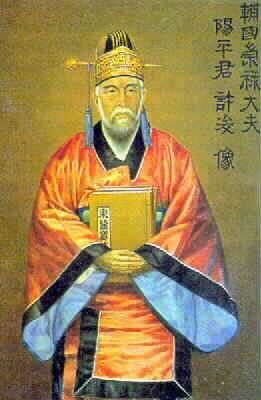
Dongui Bogam
Dongui Bogam is a compendium of traditional Korean medicine published in 1613. It was written by Heo Jun.
- Published
- 1613
- Came out
- 1613
- Written by
- Heo Jun
- Country of origin
- Joseon
All 7 facts, and where they come from
Facts
7 facts · 0 confirmed by two sources · 1 cited · 6 from one source
Where this comes from
Papalocal keeps its own record. It started from these sources; what each one said is kept here as it was copied, so a change on their side never changes this page by itself. Tap one to read its version.
What Wikidata says · copied November 19, 2026 · revision 2489201007
- Described as
- compendium of traditional Korean medicine published in 1613
- Other names
- Treasury of Oriental Medicine
- What it is
- literary work
- Written by
- Heo Jun
- Published
- 1613
- Language
- Classical Chinese
- Country of origin
- Joseon
- Came out
- 1613 · 1 reference
- Country
- South Korea
- Wikipedias with a page
- 17
Wikidata item Q494387 (wikidata.org/wiki/Q494387), public domain (CC0). Copied 2026-11-19.
What Wikipedia says · copied November 19, 2026 · revision 1356868421
The Dongui Bogam (Korean: 동의보감; translated as "Principles and Practice of Eastern Medicine") is a Korean book compiled by the royal physician, Heo Jun and was first published in 1613 during the Joseon period of Korea.
The book is regarded as important in traditional Korean medicine, and is one of the classics of Oriental medicine today. In July 2009, it was added to UNESCO’s Memory of the World International Register. The original edition of Dongui Bogam is currently preserved by the Korean National Library. The original was written in Hanja and only part of it was transcribed in Korean for wide reading use, as only officials understood in Hanmun. It was translated to English in 2013.
From the Wikipedia article “Donguibogam” (en.wikipedia.org/wiki/Donguibogam), by its contributors, under CC BY-SA 4.0 (creativecommons.org/licenses/by-sa/4.0/). Copied 2026-11-19; not changed.
Confirmed Two sources agree. Cited One source, and it names where it got it. One source One source, without a reference of its own. Sources disagree The sources disagree. We show the best-supported value and keep theirs below.
Picture: Wikimedia Commons: Dongibogam.jpg · See Commons file page