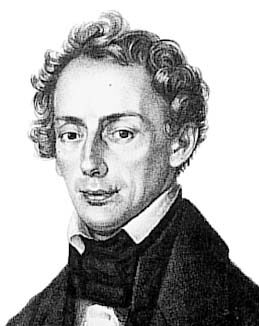
Doppler effect
Doppler effect is a frequency change of a wave for observer relative to its source.
All 2 facts, and where they come from
Facts
2 facts · 0 confirmed by two sources · 1 cited · 1 from one source
Where this comes from
Papalocal keeps its own record. It started from these sources; what each one said is kept here as it was copied, so a change on their side never changes this page by itself. Tap one to read its version.
What Wikidata says · copied November 17, 2026 · revision 2549286167
- Described as
- frequency change of a wave for observer relative to its source
- Other names
- Doppler's principle, Doppler shift
- What it is
- physical phenomenon
- Named after
- Christian Dopplerr · 1 reference
- Wikipedias with a page
- 88
Wikidata item Q76436 (wikidata.org/wiki/Q76436), public domain (CC0). Copied 2026-11-17.
What Wikipedia says · copied November 17, 2026 · revision 1383797428
The Doppler effect (also Doppler shift) is the change in the frequency or, equivalently, the period of a wave in relation to an observer who is moving relative to the source of the wave. It is named after Christian Doppler, who described the phenomenon in 1842. A common example of a Doppler shift is the change of pitch heard when a vehicle approaches and recedes from an observer. Compared to the emitted sound, the received sound has a higher pitch during the approach, identical at the instant of passing by, and lower pitch during the recession.
When the source of the sound wave is moving towards the observer, each successive cycle of the wave is emitted from a position closer to the observer than the previous cycle. Hence, from the observer's perspective, the period or time between cycles is reduced, meaning the frequency is increased. Conversely, if the source of the sound wave is moving away from the observer, each cycle of the wave is emitted from a position farther from the observer than the previous cycle, so the period or time between successive cycles is increased, thus reducing the frequency.
For waves propagating in a vacuum, as is possible for electromagnetic waves or gravitational waves, only the relative velocity between the observer and the source needs to be considered. For waves that propagate in a medium, such as sound waves, the velocity of the observer and of the source are relative to the medium in which the waves are transmitted. The total Doppler effect in such cases may therefore result from motion of the source, motion of the observer, motion of the medium, or any combination thereof.
From the Wikipedia article “Doppler effect” (en.wikipedia.org/wiki/Doppler_effect), by its contributors, under CC BY-SA 4.0 (creativecommons.org/licenses/by-sa/4.0/). Copied 2026-11-17; not changed.
Confirmed Two sources agree. Cited One source, and it names where it got it. One source One source, without a reference of its own. Sources disagree The sources disagree. We show the best-supported value and keep theirs below.
Picture: Wikimedia Commons: Picture of the first 'wall formula' in the city of Utrecht 01.jpg · See Commons file page