Duchy of Saxony
Duchy of Saxony is a (804-1260) duchy of Holy Roman Empire.
- Country
- Germany
- Created
- 804
All 7 facts, and where they come from
Facts
7 facts · 0 confirmed by two sources · 0 cited · 7 from one source
Where this comes from
Papalocal keeps its own record. It started from these sources; what each one said is kept here as it was copied, so a change on their side never changes this page by itself. Tap one to read its version.
What Wikidata says · copied November 17, 2026 · revision 2551092119
- Described as
- (804-1260) duchy of Holy Roman Empire
- Other names
- Saxony
- What it is
- duchy; stem duchy (804–962); state in the Holy Roman Empire (962–)
- Followed by
- Duchy of Saxe-Wittenberg
- Created
- 804
- Ended
- 1296
- Country
- Germany
- Wikipedias with a page
- 46
Wikidata item Q164092 (wikidata.org/wiki/Q164092), public domain (CC0). Copied 2026-11-17.
What Wikipedia says · copied November 17, 2026 · revision 1382991877
The Duchy of Saxony (German: Herzogtum Sachsen; Low German: Hartogdom Sassen) was a medieval duchy that encompassed Old Saxony, a historical region settled by the Saxons since the Migration Period. Initially independent, it came under the sphere of influence of the neighboring Frankish rulers as early as the Merovingian era. It was later subdued by Charlemagne during the Saxon Wars (772–804), and incorporated into the Carolingian Empire. From the Treaty of Verdun (843) onwards, it belonged to the East Frankish Kingdom, and thus became one of the five stem duchies of the emerging German realm. Saxon duke Henry the Fowler was elected German king in 919, thus founding the Saxon dynasty that ruled Germany and the Holy Roman Empire up to 1024.
From the middle of the 10th century, the Duchy was administered and then ruled by the House of Billung, and later by the House of Welf. Dukes of Saxony were also counted among the prince-electors. Upon the deposition of duke Henry the Lion in 1180, the ducal title, together with the electoral rights, fell to the House of Ascania. In time, many territories were split from the ducal jurisdiction, such as the Principality of Anhalt in 1218 and the Duchy of Brunswick-Lüneburg in 1235. In 1296, the remaining lands were divided between the Ascanian ducal branches of Saxe-Lauenburg and Saxe-Wittenberg. Their mutual dispute over the right of wielding the electoral office was resolved by the Golden Bull of 1356, granting the title of Electors of Saxony to dukes of Saxe-Wittenberg. Upon the extinction of that ducal line in 1422, the remaining Ascanian line of Saxe-Lauenburg claimed both the Saxe-Wittenberg ducal possessions and the electoral dignity. Those requests were denied by the emperor Sigismund, who granted the possessions and titles in question to the House of Wettin. Since that time, the Wettin aglomeration of lands in the middle Elbe regions (Saxe-Wittenberg, March of Meissen, Osterland and others) led to the emergence of Upper Saxony, centered on the Wettin Electorate of Saxony, while core territories of the former stem duchy in the old Saxony came to be known as Lower Saxony.
From the Wikipedia article “Duchy of Saxony” (en.wikipedia.org/wiki/Duchy_of_Saxony), by its contributors, under CC BY-SA 4.0 (creativecommons.org/licenses/by-sa/4.0/). Copied 2026-11-17; not changed.
Confirmed Two sources agree. Cited One source, and it names where it got it. One source One source, without a reference of its own. Sources disagree The sources disagree. We show the best-supported value and keep theirs below.
People connected 5
Citizen of
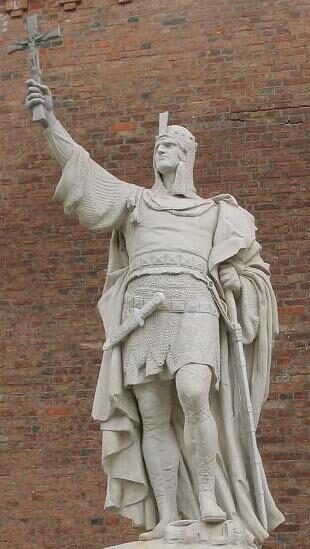 Albert the Bear1st Margrave of Brandenburg (1157-70)
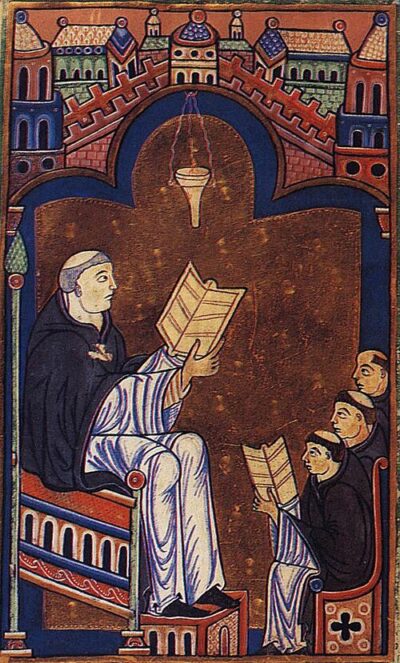 Hugh of Saint VictorGerman-French canon regular and theologian
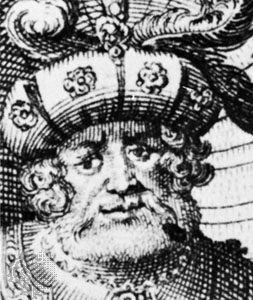 Henry XDuke of Bavaria, Duke of Saxony and Spoleto
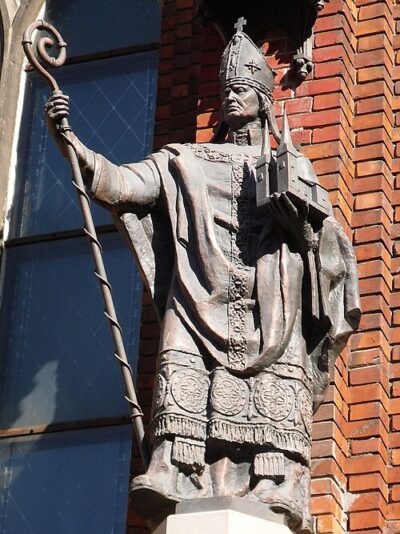 Albert of Rigabishop (1160s–1229)