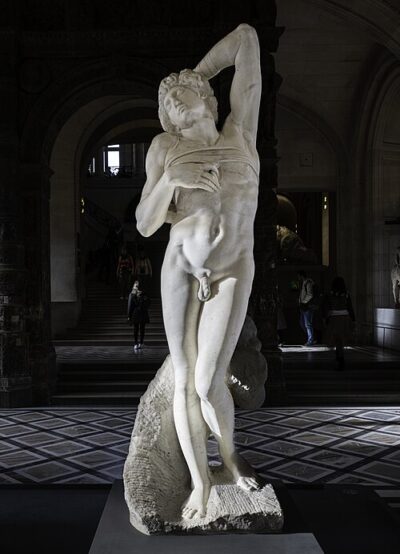
Dying Slave
Dying Slave is a sculpture by Michelangelo. It came out in 1500.
- Came out
- 1510s (1500–1515)
- Created by
- Michelangelo
- Genre
- nude
All 5 facts, and where they come from
Facts
5 facts · 0 confirmed by two sources · 1 cited · 4 from one source
Where this comes from
Papalocal keeps its own record. It started from these sources; what each one said is kept here as it was copied, so a change on their side never changes this page by itself. Tap one to read its version.
What Wikidata says · copied November 17, 2026 · revision 2569187778
- Described as
- sculpture by Michelangelo
- What it is
- statue
- Created by
- Michelangelo · 1 reference
- Genre
- nude
- Came out
- 1510s (1500–1515)
- Owned by
- French State · 1 reference
- Wikipedias with a page
- 23
Wikidata item Q83862 (wikidata.org/wiki/Q83862), public domain (CC0). Copied 2026-11-17.
What Wikipedia says · copied November 17, 2026 · revision 1379020168
The Dying Slave (L'Esclave mourant, Lo Schiavo morente) is a marble sculpture by the Italian Renaissance artist Michelangelo, created between 1513 and 1516. It was intended to accompany another figure, the Rebellious Slave, as part of the design for the Tomb of Pope Julius II. The sculpture stands 215 centimeters (7 ft 1 in) tall and is housed in the Louvre Museum in Paris.
From the Wikipedia article “Dying Slave” (en.wikipedia.org/wiki/Dying_Slave), by its contributors, under CC BY-SA 4.0 (creativecommons.org/licenses/by-sa/4.0/). Copied 2026-11-17; not changed.
Confirmed Two sources agree. Cited One source, and it names where it got it. One source One source, without a reference of its own. Sources disagree The sources disagree. We show the best-supported value and keep theirs below.
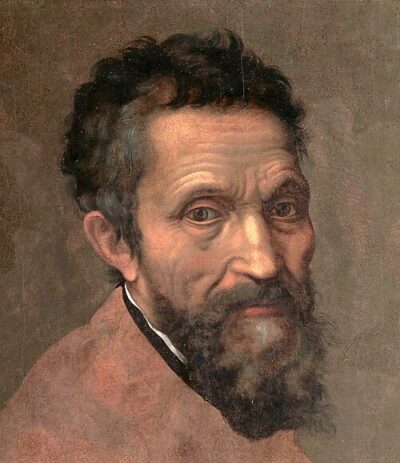
Picture: Michelangelo Buenarroti (1475-1564), via Wikimedia Commons · CC0