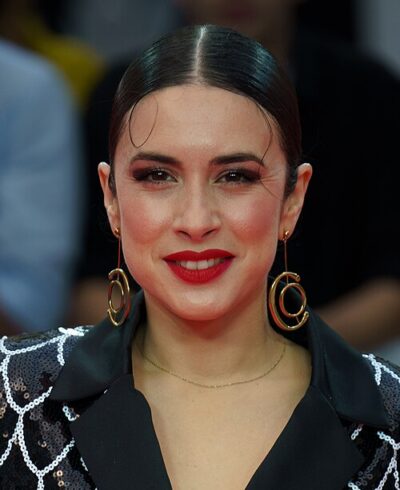
Eaea
Eaea is a 2023 song by Blanca Paloma. It came out in 2022.
- Released
- 2022
- Performed by
- Blanca Paloma
- Genre
- new flamenco
- Country of origin
- Spain
All 10 facts, and where they come from
Facts
10 facts · 0 confirmed by two sources · 0 cited · 10 from one source
Where this comes from
Papalocal keeps its own record. It started from these sources; what each one said is kept here as it was copied, so a change on their side never changes this page by itself. Tap one to read its version.
What Wikidata says · copied November 17, 2026 · revision 2496710394
- Described as
- 2023 song by Blanca Paloma
- What it is
- song; musical work/composition
- Performed by
- Blanca Paloma
- Music by
- Blanca Paloma; Álvaro Tato
- Genre
- new flamenco
- Released
- 2022
- Language
- Spanish
- Country of origin
- Spain
- Record label
- Universal Music Publishing Group
- Wikipedias with a page
- 16
Wikidata item Q116685884 (wikidata.org/wiki/Q116685884), public domain (CC0). Copied 2026-11-17.
What Wikipedia says · copied November 17, 2026 · revision 1372043134
"Eaea" (IPA: [eːäeːä]) is a song by Spanish singer Blanca Paloma. The song was co-written by Blanca Paloma alongside José Pablo Polo and Álvaro Tato, with Polo serving as the song's solo producer. It was released on 20 December 2022 through Universal. The song represented Spain in the Eurovision Song Contest 2023, where it finished in 17th at the final with 100 points.
"Eaea" is described as a new flamenco lullaby that serves as a tribute an ode to Blanca Paloma's grandmother, Carmen, and the culture of the Spanish region of Andalusia. The song drew largely positive reception from both Spanish and international critics for its flamenco elements, Blanca Paloma's vocal abilities, and its unique musical nature.
From the Wikipedia article “Eaea” (en.wikipedia.org/wiki/Eaea), by its contributors, under CC BY-SA 4.0 (creativecommons.org/licenses/by-sa/4.0/). Copied 2026-11-17; not changed.
Confirmed Two sources agree. Cited One source, and it names where it got it. One source One source, without a reference of its own. Sources disagree The sources disagree. We show the best-supported value and keep theirs below.