Ecce Homo
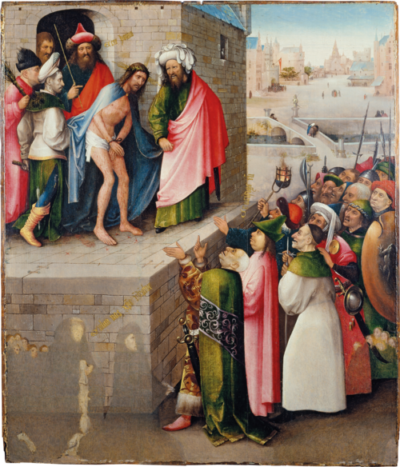
Ecce Homo is a painting by Hieronymus Bosch in the Städel. It came out in 1490.
- Came out
- 1490
- Created by
- Hieronymus Bosch
- Genre
- religious art
All 4 facts, and where they come from
Facts
4 facts · 0 confirmed by two sources · 4 cited · 0 from one source
Where this comes from
Papalocal keeps its own record. It started from these sources; what each one said is kept here as it was copied, so a change on their side never changes this page by itself. Tap one to read its version.
What Wikidata says · copied November 17, 2026 · revision 2569929239
- Described as
- painting by Hieronymus Bosch in the Städel
- What it is
- painting · 2 references
- Created by
- Hieronymus Bosch · 2 references
- Genre
- religious art · 1 reference
- Came out
- 1490 · 1 reference
- Wikipedias with a page
- 17
Wikidata item Q430069 (wikidata.org/wiki/Q430069), public domain (CC0). Copied 2026-11-17.
What Wikipedia says · copied November 17, 2026 · revision 1361251091
Ecce Homo is a painting of the episode in the Passion of Jesus by the Early Netherlandish painter Hieronymus Bosch, painted between 1475 and 1485. The original version, with a provenance in collections in Ghent, is in the Städel Museum in Frankfurt; a copy is held the Museum of Fine Arts in Boston. The painting takes its title from the Latin words Ecce Homo, "Behold the Man" spoken by the Roman Prefect Pontius Pilate when Jesus is paraded before a baying, angry mob in Jerusalem before he is sentenced to be crucified.
From the Wikipedia article “Ecce Homo (Bosch, Frankfurt)” (en.wikipedia.org/wiki/Ecce_Homo_(Bosch,_Frankfurt)), by its contributors, under CC BY-SA 4.0 (creativecommons.org/licenses/by-sa/4.0/). Copied 2026-11-17; not changed.
Confirmed Two sources agree. Cited One source, and it names where it got it. One source One source, without a reference of its own. Sources disagree The sources disagree. We show the best-supported value and keep theirs below.
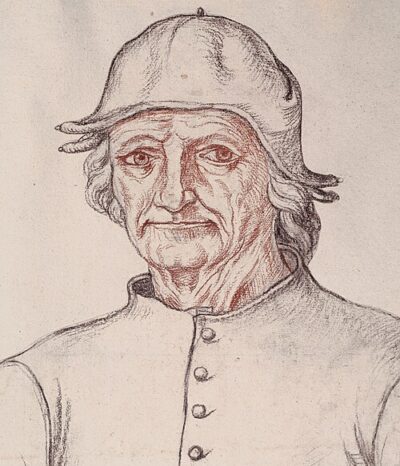
Picture: Hieronymus Bosch, via Wikimedia Commons · PDM-owner