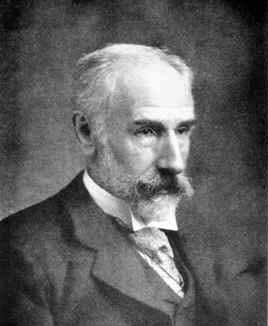
Edgeworth's limit theorem
Edgeworth's limit theorem is a mathematical theorem.
All 2 facts, and where they come from
Facts
2 facts · 0 confirmed by two sources · 0 cited · 2 from one source
Where this comes from
Papalocal keeps its own record. It started from these sources; what each one said is kept here as it was copied, so a change on their side never changes this page by itself. Tap one to read its version.
What Wikidata says · copied November 17, 2026 · revision 2570765736
- Described as
- mathematical theorem
- What it is
- theorem
- Named after
- Francis Ysidro Edgeworth
- Wikipedias with a page
- 3
Wikidata item Q5337931 (wikidata.org/wiki/Q5337931), public domain (CC0). Copied 2026-11-17.
What Wikipedia says · copied November 17, 2026 · revision 1292391520
Edgeworth's limit theorem is an economic theorem, named after Francis Ysidro Edgeworth, stating that the core of an economy shrinks to the set of Walrasian equilibria as the number of agents increases to infinity.
That is, among all possible outcomes which may result from free market exchange or barter between groups of people, while the precise location of the final settlement (the ultimate division of goods) between the parties is not uniquely determined, as the number of traders increases, the set of all possible final settlements converges to the set of Walrasian equilibria.
Intuitively, it may be interpreted as stating that as an economy grows larger, agents increasingly behave as if they are price-taking agents, even if they have the power to bargain.
Edgeworth (1881) conjectured the theorem, and provided most of the necessary intuition and went some way towards its proof. Formal proofs were presented under different assumptions by Debreu and Scarf (1963) as well as Aumann (1964), both proved under conditions stricter than what Edgeworth conjectured. Debreu and Scarf considered the case of a "replica economy" where there is a finite number of agent types and the agents added to the economy to make it "large" are of the same type and in the same proportion as those already in it. Aumann's result relied on an existence of a continuum of agents.
From the Wikipedia article “Edgeworth's limit theorem” (en.wikipedia.org/wiki/Edgeworth's_limit_theorem), by its contributors, under CC BY-SA 4.0 (creativecommons.org/licenses/by-sa/4.0/). Copied 2026-11-17; not changed.
Confirmed Two sources agree. Cited One source, and it names where it got it. One source One source, without a reference of its own. Sources disagree The sources disagree. We show the best-supported value and keep theirs below.