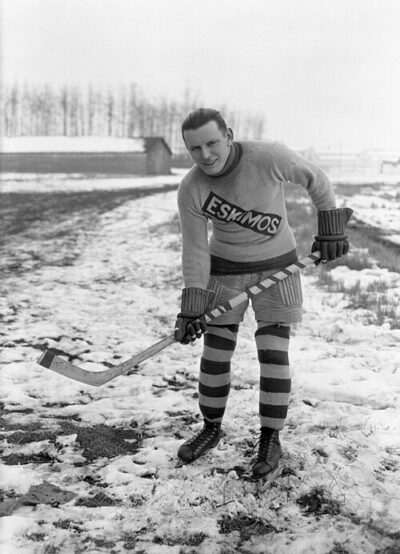
Edmonton Eskimos
Edmonton Eskimos is a former Canadian men's ice hockey team. It was founded in 1905. It plays in the Western Canada Hockey League.
- Sport
- ice hockey
- League
- Western Canada Hockey League
- Founded
- 1905
All 6 facts, and where they come from
Facts
6 facts · 0 confirmed by two sources · 0 cited · 6 from one source
Where this comes from
Papalocal keeps its own record. It started from these sources; what each one said is kept here as it was copied, so a change on their side never changes this page by itself. Tap one to read its version.
What Wikidata says · copied November 21, 2026 · revision 2475348729
- Described as
- former Canadian men's ice hockey team
- What it is
- ice hockey team
- Founded
- 1905
- Ended
- 1927
- Country
- Canada
- Sport
- ice hockey
- League
- Western Canada Hockey League
- Wikipedias with a page
- 5
Wikidata item Q1285833 (wikidata.org/wiki/Q1285833), public domain (CC0). Copied 2026-11-21.
What Wikipedia says · copied November 21, 2026 · revision 1375577128
The Edmonton Eskimos were a Canadian amateur and later professional men's ice hockey team that existed from 1911 to 1927. After playing in senior hockey in the Alberta-based Big-4 League, the Eskimos joined the Western Canada Hockey League (WCHL) for the inaugural 1921–22 WCHL season, and played for the Stanley Cup against the Ottawa Senators in the 1923 Stanley Cup Finals, as the WCHL Champions. Team alumni include Hockey Hall of Fame members Eddie Shore, Duke Keats and Bullet Joe Simpson.
While the Edmonton Eskimos disbanded after the 1926–27 season, the name was adopted by a new team in 1932–33, playing for four years before it disbanded. The name was adopted by another new team for a single 1938–39 season.
From the Wikipedia article “Edmonton Eskimos (ice hockey)” (en.wikipedia.org/wiki/Edmonton_Eskimos_(ice_hockey)), by its contributors, under CC BY-SA 4.0 (creativecommons.org/licenses/by-sa/4.0/). Copied 2026-11-21; not changed.
Confirmed Two sources agree. Cited One source, and it names where it got it. One source One source, without a reference of its own. Sources disagree The sources disagree. We show the best-supported value and keep theirs below.