Egorov's theorem
Egorov's theorem is a theorem.
All 2 facts, and where they come from
Facts
2 facts · 0 confirmed by two sources · 0 cited · 2 from one source
Where this comes from
Papalocal keeps its own record. It started from these sources; what each one said is kept here as it was copied, so a change on their side never changes this page by itself. Tap one to read its version.
What Wikidata says · copied November 18, 2026 · revision 2544644389
- Described as
- theorem
- What it is
- theorem
- Named after
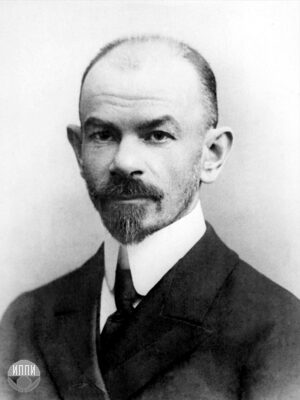
- Dmitri Egorov
- Wikipedias with a page
- 13
Wikidata item Q1191709 (wikidata.org/wiki/Q1191709), public domain (CC0). Copied 2026-11-18.
What Wikipedia says · copied November 18, 2026 · revision 1375557346
In measure theory, an area of mathematics, Egorov's theorem establishes a condition for the uniform convergence of a pointwise convergent sequence of measurable functions. It is also named Severini–Egoroff theorem or Severini–Egorov theorem, after Carlo Severini, an Italian mathematician, and Dmitri Egorov, a Russian mathematician and geometer, who published independent proofs respectively in 1910 and 1911.
Egorov's theorem can be used along with compactly supported continuous functions to prove Lusin's theorem for integrable functions.
From the Wikipedia article “Egorov's theorem” (en.wikipedia.org/wiki/Egorov's_theorem), by its contributors, under CC BY-SA 4.0 (creativecommons.org/licenses/by-sa/4.0/). Copied 2026-11-18; not changed.
Confirmed Two sources agree. Cited One source, and it names where it got it. One source One source, without a reference of its own. Sources disagree The sources disagree. We show the best-supported value and keep theirs below.