Ender's Saga
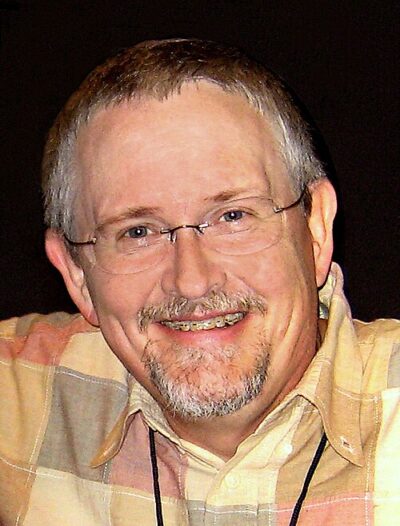
Ender's Saga is a 1985-2008 Series of six SF novels by Orson Scott Card.
- Written by
- Orson Scott Card
- Genre
- science fiction
All 4 facts, and where they come from
Facts
4 facts · 0 confirmed by two sources · 0 cited · 4 from one source
Where this comes from
Papalocal keeps its own record. It started from these sources; what each one said is kept here as it was copied, so a change on their side never changes this page by itself. Tap one to read its version.
What Wikidata says · copied November 16, 2026 · revision 2569661029
- Described as
- 1985-2008 Series of six SF novels by Orson Scott Card
- Other names
- Ender's Game series, Ender's Game
- What it is
- book series; literary hexalogy
- Written by
- Orson Scott Card
- Genre
- science fiction
- Wikipedias with a page
- 11
Wikidata item Q2642928 (wikidata.org/wiki/Q2642928), public domain (CC0). Copied 2026-11-16.
What Wikipedia says · copied November 16, 2026 · revision 1371970140
The Ender's Game series (often referred to as the Ender saga and also the Enderverse) is a series of science fiction books written by American author Orson Scott Card. The series started with the novelette Ender's Game, which was later expanded into the novel of the same title. It currently consists of sixteen novels and thirteen short stories. The first two novels in the series, Ender's Game and Speaker for the Dead, each won both the Hugo and Nebula Awards.
The series is set in a future where mankind is facing annihilation by an aggressive alien society, an insect-like race known formally as "Formics", but more colloquially as "Buggers". The series protagonist, Andrew "Ender" Wiggin, is one of the child soldiers trained at Battle School (and eventually Command School) to be the future leaders for the protection of Earth.
From the Wikipedia article “Ender's Game (novel series)” (en.wikipedia.org/wiki/Ender's_Game_(novel_series)), by its contributors, under CC BY-SA 4.0 (creativecommons.org/licenses/by-sa/4.0/). Copied 2026-11-16; not changed.
Confirmed Two sources agree. Cited One source, and it names where it got it. One source One source, without a reference of its own. Sources disagree The sources disagree. We show the best-supported value and keep theirs below.