Equal Rights Party
The Equal Rights Party is a name for several separate political parties throughout the 19th century.
- Country
- United States
All 2 facts, and where they come from
Facts
2 facts · 0 confirmed by two sources · 0 cited · 2 from one source
Where this comes from
Papalocal keeps its own record. It started from these sources; what each one said is kept here as it was copied, so a change on their side never changes this page by itself. Tap one to read its version.
What Wikidata says · copied November 16, 2026 · revision 2532178435
- Described as
- name for several separate political parties throughout the 19th century
- What it is
- political party
- Country
- United States
- Wikipedias with a page
- 2
Wikidata item Q5384139 (wikidata.org/wiki/Q5384139), public domain (CC0). Copied 2026-11-16.
What Wikipedia says · copied November 16, 2026 · revision 1379600549
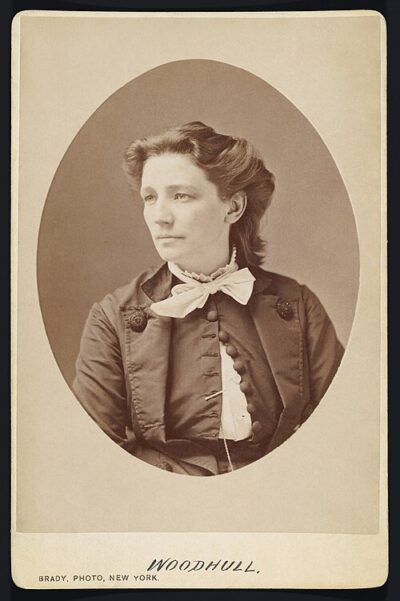
The Equal Rights Party was a United States minor party during the late 19th century that supported women's rights. The party was notable for nominating two female presidential candidates: Victoria Woodhull in 1872 and Belva Lockwood in 1884 and 1888. Woodhull and Lockwood are generally considered the first women who ran for president in the U.S. Although women could not vote in federal elections at the time, there were no laws prohibiting women from running for president. In the 1876 and 1880 presidential elections, party members supported Peter Cooper and James B. Weaver, the national candidates of the Greenback Party. Their platform focused on equal rights for men and women.
From the Wikipedia article “Equal Rights Party (United States)” (en.wikipedia.org/wiki/Equal_Rights_Party_(United_States)), by its contributors, under CC BY-SA 4.0 (creativecommons.org/licenses/by-sa/4.0/). Copied 2026-11-16; not changed.
Confirmed Two sources agree. Cited One source, and it names where it got it. One source One source, without a reference of its own. Sources disagree The sources disagree. We show the best-supported value and keep theirs below.