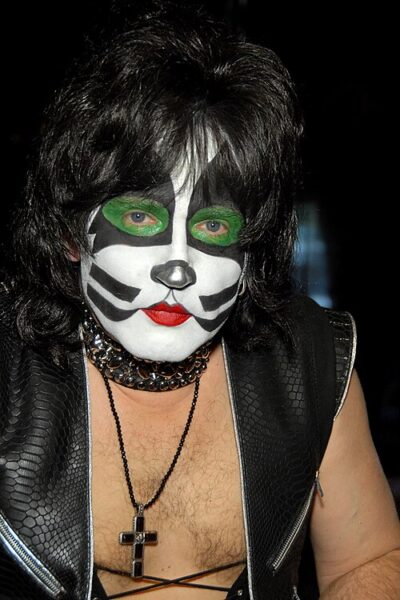
Eric Singer Project
Eric Singer Project is an American rock band. It was founded in 1996.
- Founded
- 1996
- Genre
- hard rock
- Country of origin
- United States
All 4 facts, and where they come from
Facts
4 facts · 0 confirmed by two sources · 0 cited · 4 from one source
Where this comes from
Papalocal keeps its own record. It started from these sources; what each one said is kept here as it was copied, so a change on their side never changes this page by itself. Tap one to read its version.
What Wikidata says · copied November 17, 2026 · revision 2515626424
- Described as
- American rock band
- What it is
- musical group
- Genre
- hard rock
- Country of origin
- United States
- Founded
- 1996
- Wikipedias with a page
- 7
Wikidata item Q2524427 (wikidata.org/wiki/Q2524427), public domain (CC0). Copied 2026-11-17.
What Wikipedia says · copied November 17, 2026 · revision 1332277792
The Eric Singer Project (ESP) is an American rock band. It was founded in the 1990s by Eric Singer, drummer for rock bands such as Lita Ford, Black Sabbath, Badlands, Alice Cooper, and Kiss, along with Bruce Kulick (Kiss, Grand Funk Railroad) on guitar, John Corabi (the Scream, Mötley Crüe, Ratt) on guitar and bass, and Karl Cochran on guitar and bass. Lead vocal duties were shared by Eric, John, and Karl.
As of 2007, ESP has released two albums and one DVD. The first & only studio album is an all-covers album, titled Lost and Spaced. Released in 1998, the album is hard to find and is composed mostly of studio recordings and demos. The second album, ESP Live in Japan, was released in 2007, and is a live album. The DVD is titled ESP Live at the Marquee. Chuck Garric replaced Karl Cochran on bass in 2006 and plays on the live album.
From the Wikipedia article “Eric Singer Project” (en.wikipedia.org/wiki/Eric_Singer_Project), by its contributors, under CC BY-SA 4.0 (creativecommons.org/licenses/by-sa/4.0/). Copied 2026-11-17; not changed.
Confirmed Two sources agree. Cited One source, and it names where it got it. One source One source, without a reference of its own. Sources disagree The sources disagree. We show the best-supported value and keep theirs below.