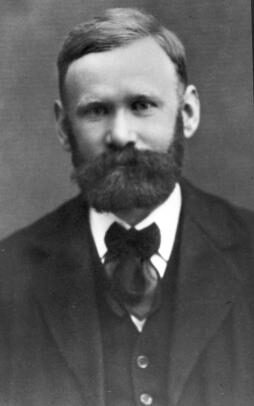
Erlang distribution
Erlang distribution is a probability distribution.
All 1 facts, and where they come from
Facts
1 facts · 0 confirmed by two sources · 0 cited · 1 from one source
Where this comes from
Papalocal keeps its own record. It started from these sources; what each one said is kept here as it was copied, so a change on their side never changes this page by itself. Tap one to read its version.
What Wikidata says · copied November 18, 2026 · revision 2496919210
- Described as
- probability distribution
- Named after
- Agner Krarup Erlang
- Wikipedias with a page
- 18
Wikidata item Q762448 (wikidata.org/wiki/Q762448), public domain (CC0). Copied 2026-11-18.
What Wikipedia says · copied November 18, 2026 · revision 1372849575
The Erlang distribution is a two-parameter family of continuous probability distributions with support x∈[0,∞). The two parameters are:
a positive integer k, the "shape", and
a positive real number λ, the "rate". The "scale", β, the reciprocal of the rate, is sometimes used instead.
The Erlang distribution is the distribution of a sum of k independent exponential variables with mean 1/λ each. Equivalently, it is the distribution of the time until the kth event of a Poisson process with a rate of λ. The Erlang and Poisson distributions are complementary, in that while the Poisson distribution counts the events that occur in a fixed amount of time, the Erlang distribution counts the amount of time until the occurrence of a fixed number of events. When k=1, the distribution simplifies to the exponential distribution. The Erlang distribution is a special case of the gamma distribution in which the shape of the distribution is discretized.
The Erlang distribution was developed by A. K. Erlang to examine the number of telephone calls that might be made at the same time to the operators of the switching stations. This work on telephone traffic engineering has been expanded to consider waiting times in queueing systems in general. The distribution is also used in the field of stochastic processes.
From the Wikipedia article “Erlang distribution” (en.wikipedia.org/wiki/Erlang_distribution), by its contributors, under CC BY-SA 4.0 (creativecommons.org/licenses/by-sa/4.0/). Copied 2026-11-18; not changed.
Confirmed Two sources agree. Cited One source, and it names where it got it. One source One source, without a reference of its own. Sources disagree The sources disagree. We show the best-supported value and keep theirs below.