Estudiantina
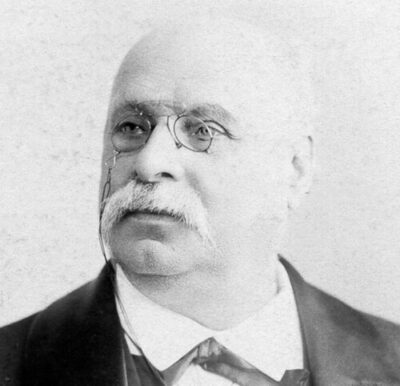
Estudiantina is a waltz by Émile Waldteufel.
All 2 facts, and where they come from
Facts
2 facts · 0 confirmed by two sources · 0 cited · 2 from one source
Where this comes from
Papalocal keeps its own record. It started from these sources; what each one said is kept here as it was copied, so a change on their side never changes this page by itself. Tap one to read its version.
What Wikidata says · copied November 17, 2026 · revision 2569934810
- Described as
- waltz by Émile Waldteufel
- What it is
- musical work/composition
- Music by
- Émile Waldteufel
- Wikipedias with a page
- 6
Wikidata item Q3059085 (wikidata.org/wiki/Q3059085), public domain (CC0). Copied 2026-11-17.
What Wikipedia says · copied November 17, 2026 · revision 1335869424
The Estudiantina waltz (or Band of Students Waltz) is a musical arrangement, made in 1883, by Émile Waldteufel, his Opus 191, No. 4. Its melody was composed earlier in 1881 by Paul Lacôme, with lyrics by Julien de Lau Lusignan.
Waldteufel first adapted it to a two-piano version, and later to an orchestral version with which classical music audiences are familiar today. The main melody is universally recognized by Americans of a certain age as the Rheingold Beer jingle, with the words "My beer is Rheingold the dry beer. Think of Rheingold whenever you buy beer. It's not bitter, not sweet, it's the extra dry treat—Won't you try extra dry Rheingold beer?". And in Germany the main melody is very popular because of a song called "Spaniens Gitarren" sung by the singers Cindy & Bert in 44 time which was a great hit for them in 1974.The waltz does not have the extended introduction so often favoured by Waldteufel and begins instead with a brief fanfare which announces the waltz's 34 time. The refrain is in D major, and is repeated twice. The second section is in G major, with a quiet repetitive note melody followed by a midsection D major part. The third part of the arrangement is in D major, with a contrasting B minor part. The final section is back in G major, this time a quieter part than the previous sections, rounded up by an ebullient chorded phrase. The main introduction is played again, as is the refrain. After a brief reprise of the second section melody in a different key, the refrain is repeated again and the waltz ends on a high-spirited note.
From the Wikipedia article “Estudiantina” (en.wikipedia.org/wiki/Estudiantina), by its contributors, under CC BY-SA 4.0 (creativecommons.org/licenses/by-sa/4.0/). Copied 2026-11-17; not changed.
Confirmed Two sources agree. Cited One source, and it names where it got it. One source One source, without a reference of its own. Sources disagree The sources disagree. We show the best-supported value and keep theirs below.