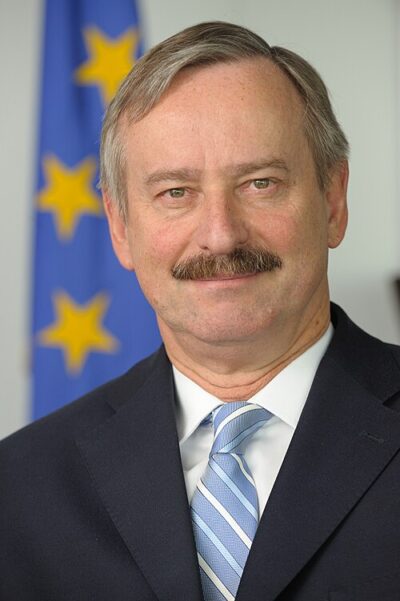
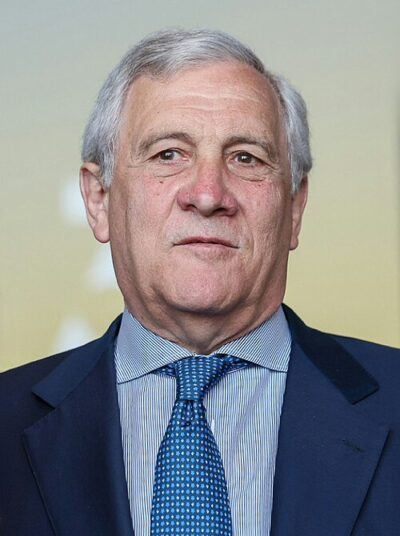
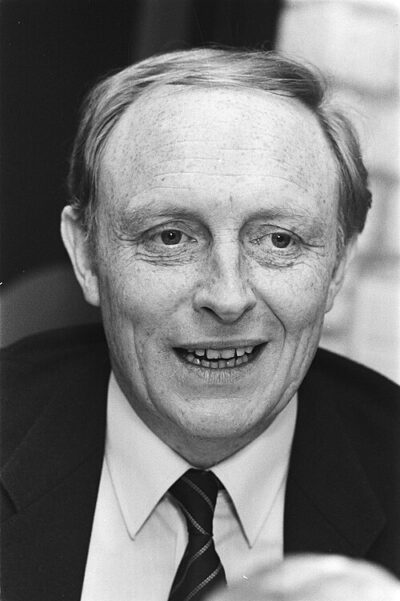
European Commissioner for Transport
European Commissioner for Transport is a Member of the EU Commission. It was created in 1958. It is an office of the European Union.
- Office of
- European Union
- Created
- 1958
All 5 facts, and where they come from
Facts
5 facts · 0 confirmed by two sources · 0 cited · 5 from one source
Where this comes from
Papalocal keeps its own record. It started from these sources; what each one said is kept here as it was copied, so a change on their side never changes this page by itself. Tap one to read its version.
What Wikidata says · copied November 17, 2026 · revision 2569422978
- Described as
- Member of the EU Commission
- What it is
- position
- Created
- 1958
- Field
- transport in the European Union
- Office of
- European Union
- Official website
- https://ec.europa.eu/transport/
- Wikipedias with a page
- 12
Wikidata item Q1676795 (wikidata.org/wiki/Q1676795), public domain (CC0). Copied 2026-11-17.
What Wikipedia says · copied November 17, 2026 · revision 1373663882
The European Commissioner for Sustainable Transport and Tourism is a member of the European Commission whose portfolio includes the planning and development of homogeneous transport policies and regulations across the Union, of the Trans-European Transport Network as well as of interoperation, navigation and signalling programs such as the European Rail Traffic Management System, the Galileo positioning system and the Single European Sky.
The current commissioner is Apostolos Tzitzikostas, from Greece.
From the Wikipedia article “European Commissioner for Sustainable Transport and Tourism” (en.wikipedia.org/wiki/European_Commissioner_for_Sustainable_Transport_and_Tourism), by its contributors, under CC BY-SA 4.0 (creativecommons.org/licenses/by-sa/4.0/). Copied 2026-11-17; not changed.
Confirmed Two sources agree. Cited One source, and it names where it got it. One source One source, without a reference of its own. Sources disagree The sources disagree. We show the best-supported value and keep theirs below.