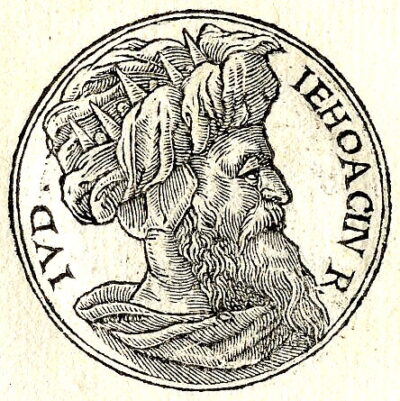
Exilarch
Exilarch is a leader of the Jewish community in Babylon during the era of the Parthians, Sassanids and Abbasids up until the Mongol invasion of Baghdad in 1258, with intermittent gaps.
All 1 facts, and where they come from
Facts
1 facts · 0 confirmed by two sources · 0 cited · 1 from one source
Where this comes from
Papalocal keeps its own record. It started from these sources; what each one said is kept here as it was copied, so a change on their side never changes this page by itself. Tap one to read its version.
What Wikidata says · copied November 17, 2026 · revision 2569330718
- Described as
- leader of the Jewish community in Babylon during the era of the Parthians, Sassanids and Abbasids up until the Mongol invasion of Baghdad in 1258, with intermittent gaps
- Other names
- Exilarchy
- What it is
- position
- Wikipedias with a page
- 19
Wikidata item Q1265579 (wikidata.org/wiki/Q1265579), public domain (CC0). Copied 2026-11-17.
What Wikipedia says · copied November 17, 2026 · revision 1385141663
The exilarch was the leader of the Jewish community in Mesopotamia (modern-day Iraq) during the Parthian and Sasanian Empires and Abbasid Caliphate up until the 1258 CE Mongol invasion of Baghdad, with intermittent gaps due to ongoing political developments. The exilarch was regarded by the Jewish community as the royal heir of the Davidic line and held prominence as both a rabbinical authority and a noble within the Persian and Arab courts.
Within the Sasanian Empire, the exilarch was the political equivalent of the Catholicos of the Church of the East and was thus responsible for community-specific organizational tasks such as running the rabbinical courts, collecting taxes from Jewish communities, supervising and providing financing for the Talmudic academies in Babylonia, and the charitable re-distribution and financial assistance to needy members of the exile community. The position of exilarch was hereditary, held in continuity by a family that traced its patrilineal descent from antiquity stemming from King David.
The first historical documents referring to it date from the time when Babylonia was part of the late Parthian Empire. The office first appears in the 2nd century and continues through the middle of the 6th century under different Persian dynasties (the Parthians and Sassanids). In the late 5th and early 6th centuries, Mar-Zutra II briefly ruled a politically independent state from Mahoza for about 7 years. He was eventually defeated by Kavadh I, King of Persia, and the office of the exilarch was diminished for some time thereafter. The position was restored to prominence in the 7th century, under the rule of the Arab Caliphate, and the office of exilarch continued to be appointed by Arab authorities through the 11th century.
The exilarch's authority came under considerable challenge in 825 during the reign of al-Ma'mun who issued a decree permitting a group of ten men from any religious community to organize separately, which allowed the Gaon of the Talmudic academies of Sura and Pumbedita to compete with the exilarch for power and influence, later contributing to the wider schism between Karaites and Rabbinic Jewry.
From the Wikipedia article “Exilarch” (en.wikipedia.org/wiki/Exilarch), by its contributors, under CC BY-SA 4.0 (creativecommons.org/licenses/by-sa/4.0/). Copied 2026-11-17; not changed.
Confirmed Two sources agree. Cited One source, and it names where it got it. One source One source, without a reference of its own. Sources disagree The sources disagree. We show the best-supported value and keep theirs below.