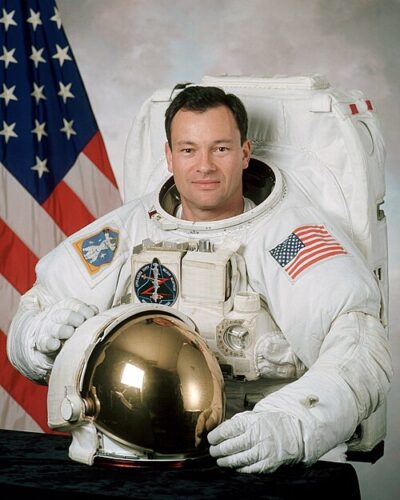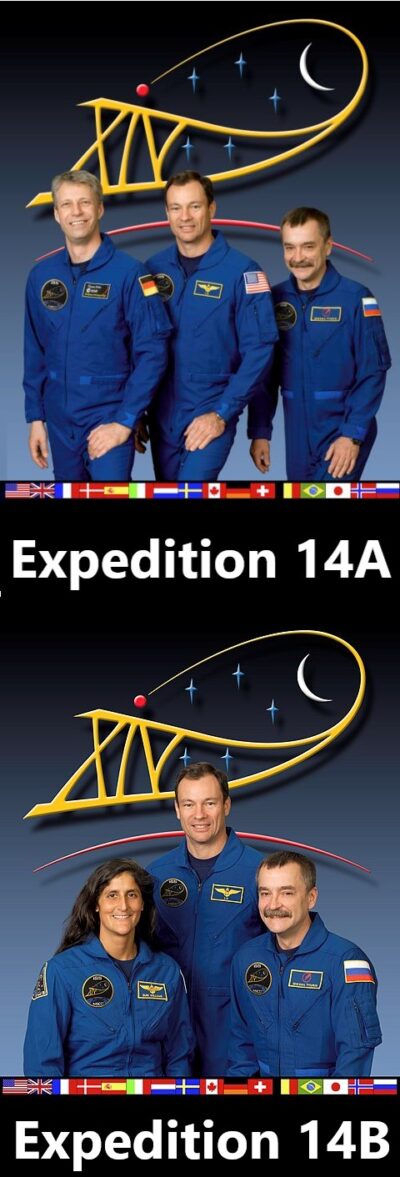
Expedition 14
Expedition 14 is an expedition to the International Space Station.
All 4 facts, and where they come from
Facts
4 facts · 0 confirmed by two sources · 2 cited · 2 from one source
Where this comes from
Papalocal keeps its own record. It started from these sources; what each one said is kept here as it was copied, so a change on their side never changes this page by itself. Tap one to read its version.
What Wikidata says · copied November 17, 2026 · revision 2558210446
- Described as
- expedition to the International Space Station
- What it is
- expedition to the International Space Station
- Comes after
- Expedition 13 · 1 reference
- Followed by
- Expedition 15 · 1 reference
- Official website
- http://www.nasa.gov/mission_pages/station/expeditions/expedition14/index.html
- Wikipedias with a page
- 22
Wikidata item Q17198 (wikidata.org/wiki/Q17198), public domain (CC0). Copied 2026-11-17.
What Wikipedia says · copied November 17, 2026 · revision 1363530353
Expedition 14 was the 14th expedition to the International Space Station (ISS). Commander Michael López-Alegría, and flight engineer Mikhail Tyurin launched from Baikonur Cosmodrome on 18 September 2006, 04:09 UTC, aboard Soyuz TMA-9. They joined Thomas Reiter, who had arrived at the ISS on 6 July 2006 aboard Space Shuttle Discovery during mission STS-121. In December 2006, Discovery mission STS-116 brought Sunita Williams to replace Reiter as the third member of Expedition 14. On 21 April 2007, López-Alegría and Tyurin returned to Earth aboard TMA-9. Landing occurred at 12:31:30 UTC.
From the Wikipedia article “Expedition 14” (en.wikipedia.org/wiki/Expedition_14), by its contributors, under CC BY-SA 4.0 (creativecommons.org/licenses/by-sa/4.0/). Copied 2026-11-17; not changed.
Confirmed Two sources agree. Cited One source, and it names where it got it. One source One source, without a reference of its own. Sources disagree The sources disagree. We show the best-supported value and keep theirs below.
Picture: NASA, via Wikimedia Commons · Public domain