Expedition 40
Expedition 40 is a 40th expedition to the International Space Station.
All 4 facts, and where they come from
Facts
4 facts · 0 confirmed by two sources · 0 cited · 4 from one source
Where this comes from
Papalocal keeps its own record. It started from these sources; what each one said is kept here as it was copied, so a change on their side never changes this page by itself. Tap one to read its version.
What Wikidata says · copied November 17, 2026 · revision 2558211089
- Described as
- 40th expedition to the International Space Station
- What it is
- expedition to the International Space Station
- Comes after
- Expedition 39
- Followed by
- Expedition 41
- Official website
- http://www.nasa.gov/mission_pages/station/expeditions/expedition40/
- Wikipedias with a page
- 21
Wikidata item Q559030 (wikidata.org/wiki/Q559030), public domain (CC0). Copied 2026-11-17.
What Wikipedia says · copied November 17, 2026 · revision 1363531126
Expedition 40 was the 40th expedition to the International Space Station. A portion of the Expedition 39 crew transferred to Expedition 40 while the remainder of the crew launched on May 28, 2014 from Baikonur Cosmodrome in Kazakhstan.
Upon achieving orbit approximately nine minutes after launch, Soyuz TMA-13M, delivering the remainder of the crew, began a four-orbit rendezvous with the International Space Station. Soyuz TMA-13M subsequently docked with the Rassvet module of the ISS at 1:44 UTC on May 29. Hatches were opened between the two spacecraft just over two hours later at 3:52 UTC. The expedition ended with the undocking of Soyuz TMA-12M on September 10, 2014. The remainder of Expedition 40's crew joined Expedition 41.
From the Wikipedia article “Expedition 40” (en.wikipedia.org/wiki/Expedition_40), by its contributors, under CC BY-SA 4.0 (creativecommons.org/licenses/by-sa/4.0/). Copied 2026-11-17; not changed.
Confirmed Two sources agree. Cited One source, and it names where it got it. One source One source, without a reference of its own. Sources disagree The sources disagree. We show the best-supported value and keep theirs below.
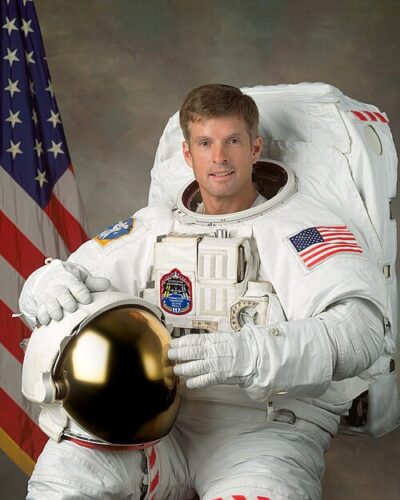
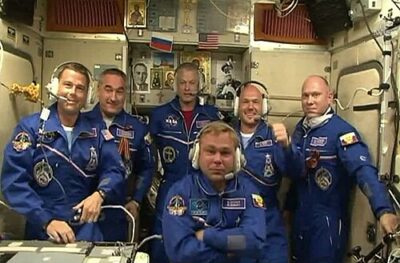
Picture: NASA TV, via Wikimedia Commons · Public domain