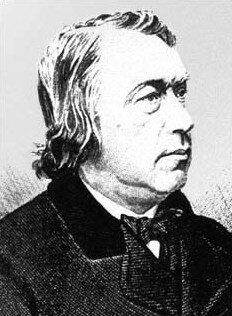
Extraordinary Popular Delusions and the Madness of Crowds
Extraordinary Popular Delusions and the Madness of Crowds is a 1841 collection of historic anecdotes about human follies by Charles Mackay.
- Published
- 1841
- Written by
- Charles Mackay
- Genre
- non-fiction
- Country of origin
- United Kingdom
All 7 facts, and where they come from
Facts
7 facts · 0 confirmed by two sources · 0 cited · 7 from one source
Where this comes from
Papalocal keeps its own record. It started from these sources; what each one said is kept here as it was copied, so a change on their side never changes this page by itself. Tap one to read its version.
What Wikidata says · copied November 17, 2026 · revision 2494880286
- Described as
- 1841 collection of historic anecdotes about human follies by Charles Mackay
- Other names
- Memoirs of Extraordinary Popular Delusions (title of the first 1841 edition)
- What it is
- written work
- Written by
- Charles Mackay
- Publisher
- Richard Bentley · 1 reference
- Genre
- non-fiction
- Published
- 1841
- Language
- English
- Country of origin
- United Kingdom · 1 reference
- Wikipedias with a page
- 9
Wikidata item Q2431853 (wikidata.org/wiki/Q2431853), public domain (CC0). Copied 2026-11-17.
What Wikipedia says · copied November 17, 2026 · revision 1384242815
Extraordinary Popular Delusions and the Madness of Crowds is an early study of crowd psychology by Scottish journalist Charles Mackay, first published in 1841 under the title Memoirs of Extraordinary Popular Delusions. The book was published in three volumes: "National Delusions", "Peculiar Follies", and "Philosophical Delusions". A second edition appeared in 1852, reorganizing the three volumes into two and adding numerous engravings. Mackay was an accomplished teller of stories, though he wrote in a journalistic and somewhat sensational style.
The subjects of Mackay's debunking include alchemy, crusades, duels, economic bubbles, fortune-telling, haunted houses, the Drummer of Tedworth, the influence of politics and religion on the shapes of beards and hair, magnetisers (influence of imagination in curing disease), murder through poisoning, prophecies, popular admiration of great thieves, popular follies of great cities, and relics. Present-day writers on economics, such as Michael Lewis and Andrew Tobias, laud the three chapters on economic bubbles.
In later editions, Mackay added a footnote referencing the Railway Mania of the 1840s as another "popular delusion" which was at least as important as the South Sea Bubble. In the 21st century, the mathematician Andrew Odlyzko pointed out, in a published lecture, that Mackay himself played a role in this economic bubble; as a leader writer in The Glasgow Argus, Mackay wrote on 2 October 1845: "There is no reason whatever to fear a crash".
From the Wikipedia article “Extraordinary Popular Delusions and the Madness of Crowds” (en.wikipedia.org/wiki/Extraordinary_Popular_Delusions_and_the_Madness_of_Crowds), by its contributors, under CC BY-SA 4.0 (creativecommons.org/licenses/by-sa/4.0/). Copied 2026-11-17; not changed.
Confirmed Two sources agree. Cited One source, and it names where it got it. One source One source, without a reference of its own. Sources disagree The sources disagree. We show the best-supported value and keep theirs below.
Picture: Wikimedia Commons: Mackay 1841 edition front page.png · See Commons file page