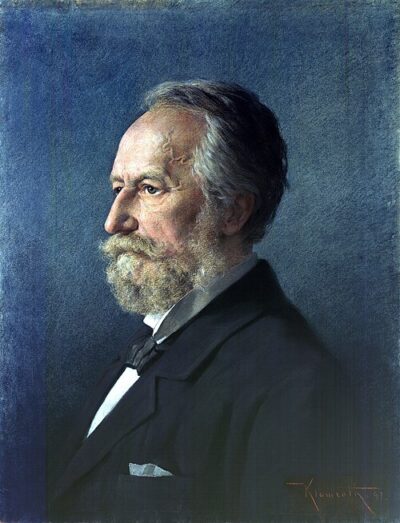
Fick principle
Fick principle is an applied to the measurement of cardiac output.
All 2 facts, and where they come from
Facts
2 facts · 0 confirmed by two sources · 0 cited · 2 from one source
Where this comes from
Papalocal keeps its own record. It started from these sources; what each one said is kept here as it was copied, so a change on their side never changes this page by itself. Tap one to read its version.
What Wikidata says · copied November 17, 2026 · revision 2541746701
- Described as
- applied to the measurement of cardiac output
- What it is
- principle
- Named after
- Adolf Fick
- Wikipedias with a page
- 6
Wikidata item Q177156 (wikidata.org/wiki/Q177156), public domain (CC0). Copied 2026-11-17.
What Wikipedia says · copied November 17, 2026 · revision 1325624895
The Fick principle states that blood flow to an organ can be calculated using a marker substance if the following information is known:
Amount of marker substance taken up by the organ per unit time
Concentration of marker substance in arterial blood supplying the organ
Concentration of marker substance in venous blood leaving the organ
Developed by Adolf Eugen Fick (1829–1901), the Fick principle has been applied to the measurement of cardiac output. Its underlying principles may also be applied in a variety of clinical situations.
In Fick's original method, the "organ" was the entire human body and the marker substance was oxygen. The first published mention was in conference proceedings from July 9, 1870 from a lecture he gave at that conference; it is this publishing that is most often used by articles to cite Fick's contribution. The principle may be applied in different ways. For example, if the blood flow to an organ is known, together with the arterial and venous concentrations of the marker substance, the uptake of marker substance by the organ may then be calculated.
From the Wikipedia article “Fick principle” (en.wikipedia.org/wiki/Fick_principle), by its contributors, under CC BY-SA 4.0 (creativecommons.org/licenses/by-sa/4.0/). Copied 2026-11-17; not changed.
Confirmed Two sources agree. Cited One source, and it names where it got it. One source One source, without a reference of its own. Sources disagree The sources disagree. We show the best-supported value and keep theirs below.