
flying ace
Flying ace is a military propaganda and slang term; informal distinction given to fighter pilots.
All 3 facts, and where they come from
Facts
3 facts · 0 confirmed by two sources · 0 cited · 3 from one source
Where this comes from
Papalocal keeps its own record. It started from these sources; what each one said is kept here as it was copied, so a change on their side never changes this page by itself. Tap one to read its version.
What Wikidata says · copied November 17, 2026 · revision 2569181397
- Described as
- military propaganda and slang term; informal distinction given to fighter pilots
- Other names
- fighter ace, air ace
- What it is
- award; profession; military slang term
- Wikipedias with a page
- 45
Wikidata item Q222982 (wikidata.org/wiki/Q222982), public domain (CC0). Copied 2026-11-17.
What Wikipedia says · copied November 17, 2026 · revision 1378124742
A flying ace, fighter ace or air ace is a military aviator credited with shooting down a certain minimum number of enemy aircraft during aerial combat; the exact number of aerial victories required to officially qualify as an ace varies, but is usually considered to be five or more.
The concept of the "ace" emerged in 1915 during World War I, at the same time as aerial dogfighting. It was a propaganda term intended to provide the home front with a cult of the hero in what was otherwise a war of attrition. The individual actions of aces were widely reported and the image was disseminated of the ace as a chivalrous knight reminiscent of a bygone era. For a brief early period when air-to-air combat was just being invented, the exceptionally skilled pilot could shape the battle in the skies. For most of the war, however, the image of the ace had little to do with the reality of air warfare, in which fighters fought in formation and air superiority depended heavily on the relative availability of resources. The use of the term ace to describe these pilots began in World War I, when French newspapers described Adolphe Pégoud, as l'As (the ace) after he became the first pilot to down five German aircraft.
The successes of such German ace pilots as Max Immelmann and Oswald Boelcke, and especially Manfred von Richthofen, the most victorious fighter pilot of the First World War, were well-publicized for the benefit of civilian morale, and the Pour le Mérite, Prussia's highest award for gallantry, became part of the uniform of a leading German ace. In the Luftstreitkräfte, the Pour le Mérite was nicknamed Der blaue Max/The Blue Max, after Max Immelmann, who was the first pilot to receive this award. Initially, German aviators had to destroy eight Allied aircraft to receive this medal. As the war progressed, the qualifications for Pour le Mérite were raised, but successful German fighter pilots continued to be hailed as national heroes for the remainder of the war.
The few aces among combat aviators have historically accounted for the majority of air-to-air victories in military history.
From the Wikipedia article “Flying ace” (en.wikipedia.org/wiki/Flying_ace), by its contributors, under CC BY-SA 4.0 (creativecommons.org/licenses/by-sa/4.0/). Copied 2026-11-17; not changed.
Confirmed Two sources agree. Cited One source, and it names where it got it. One source One source, without a reference of its own. Sources disagree The sources disagree. We show the best-supported value and keep theirs below.
People connected 4
Won it
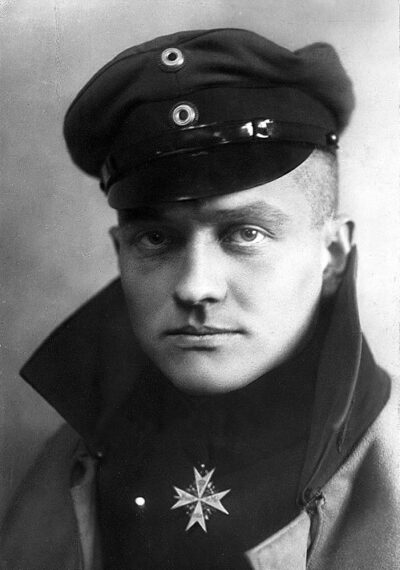 Manfred von RichthofenGerman fighter pilot (1892-1918)
 Adolf GallandGerman World War II Luftwafffe general and fighter pilot (1912-1996)
 Ernst UdetGerman flying ace (1896–1941)

