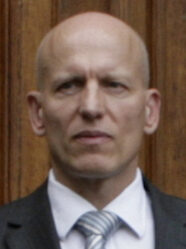
For Fatherland and Freedom/LNNK
For Fatherland and Freedom/LNNK is a Latvian political party. It was founded in 1993. Its headquarters are in Riga. It stands for national conservatism.
- Country
- Latvia
- Founded
- February 1, 1993
- Ideology
- national conservatism
- Chair
- Roberts Zīle
All 8 facts, and where they come from
Facts
8 facts · 0 confirmed by two sources · 0 cited · 8 from one source
Where this comes from
Papalocal keeps its own record. It started from these sources; what each one said is kept here as it was copied, so a change on their side never changes this page by itself. Tap one to read its version.
What Wikidata says · copied November 18, 2026 · revision 2553365674
- Described as
- Latvian political party
- What it is
- political party
- Founded
- February 1, 1993
- Ended
- 2011
- Headquarters
- Riga
- Country
- Latvia
- Chair
- Roberts Zīle · 1 reference
- Ideology
- national conservatism · 1 reference
- Official website
- http://www.tb.lv
- Wikipedias with a page
- 15
Wikidata item Q1479723 (wikidata.org/wiki/Q1479723), public domain (CC0). Copied 2026-11-18.
What Wikipedia says · copied November 18, 2026 · revision 1377258126
For Fatherland and Freedom/LNNK (Latvian: Tēvzemei un Brīvībai/LNNK, abbreviated to TB/LNNK) was a free-market, national conservative political party in Latvia. In 2011, it initiated a merger with All for Latvia! into the National Alliance, which was finalized on 3 December 2013.
The party was founded from smaller groups in 1993 as For Fatherland and Freedom (TB), with a focus on promoting the Latvian language and putting a cap on naturalisation of Latvian non-citizens. It won six Saeima seats in its first year, and 14 in 1995, when it entered the governing centre-right coalition. It merged with the more moderate Latvian National Independence Movement (LNNK) in 1997, and moved its emphasis to economic liberalisation. TB/LNNK's then-leader, Guntars Krasts, was Prime Minister from 1997 to 1998. It remained in government until 2004, and again from 2006.
Initially from the nationalist right, the party became more moderate after the 1997 merger. It also shifted from supporting economic interventionism to the free market. A predominantly ethnic Latvian party, the party's support base was university-educated, middle class, and concentrated in Riga. The party was soft Eurosceptic, and was a member of the anti-federalist Alliance of European Conservatives and Reformists. Its only MEP, party leader Roberts Zīle, sat with the ECR group in the European Parliament. It has caused some controversy with its participation in the Remembrance Day of the Latvian Legionnaires processions.
For the 2010 parliamentary election, it formed an alliance with the nationalist All for Latvia! party. In July 2011, both parties agreed to merge into a unitary party, bearing the name National Alliance, which was completed on 3 December 2013.
From the Wikipedia article “For Fatherland and Freedom/LNNK” (en.wikipedia.org/wiki/For_Fatherland_and_Freedom/LNNK), by its contributors, under CC BY-SA 4.0 (creativecommons.org/licenses/by-sa/4.0/). Copied 2026-11-18; not changed.
Confirmed Two sources agree. Cited One source, and it names where it got it. One source One source, without a reference of its own. Sources disagree The sources disagree. We show the best-supported value and keep theirs below.