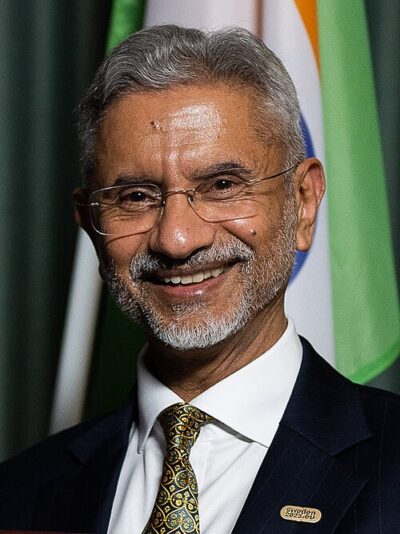
Foreign Secretary of India
Foreign Secretary of India is a seniormost non-elected official of the Ministry of External Affairs of India. It was created in 1958.
All 5 facts, and where they come from
Facts
5 facts · 0 confirmed by two sources · 0 cited · 5 from one source
Where this comes from
Papalocal keeps its own record. It started from these sources; what each one said is kept here as it was copied, so a change on their side never changes this page by itself. Tap one to read its version.
What Wikidata says · copied November 17, 2026 · revision 2553790290
- Described as
- seniormost non-elected official of the Ministry of External Affairs of India
- What it is
- position
- Created
- 1958
- Country
- India
- Office of
- India · 1 reference
- Official website
- http://www.mea.gov.in · 1 reference
- Wikipedias with a page
- 5
Wikidata item Q5468326 (wikidata.org/wiki/Q5468326), public domain (CC0). Copied 2026-11-17.
What Wikipedia says · copied November 17, 2026 · revision 1382985220
Foreign Secretary of India (ISO: Vidēś Saciv) is the topmost non-elected official and the administrative head of the Ministry of External Affairs. This post is held by an Indian Foreign Service (IFS) officer of the rank of secretary to the government of India. Vikram Misri is the foreign secretary since July 2024, succeeding Vinay Mohan Kwatra.
As an officer of the rank of secretary to the government of India, the foreign secretary ranks 23rd on the Indian Order of Precedence. However, unlike other secretaries to the government of India, the foreign secretary is also the top diplomat of the country and heads the Foreign Service Board.
Before the post of Foreign Secretary was created, Secretary General of Ministry of External Affairs was the head of Ministry of External Affairs, which was held by Girija Bajpai and N. R. Pillai.
From the Wikipedia article “Foreign Secretary (India)” (en.wikipedia.org/wiki/Foreign_Secretary_(India)), by its contributors, under CC BY-SA 4.0 (creativecommons.org/licenses/by-sa/4.0/). Copied 2026-11-17; not changed.
Confirmed Two sources agree. Cited One source, and it names where it got it. One source One source, without a reference of its own. Sources disagree The sources disagree. We show the best-supported value and keep theirs below.