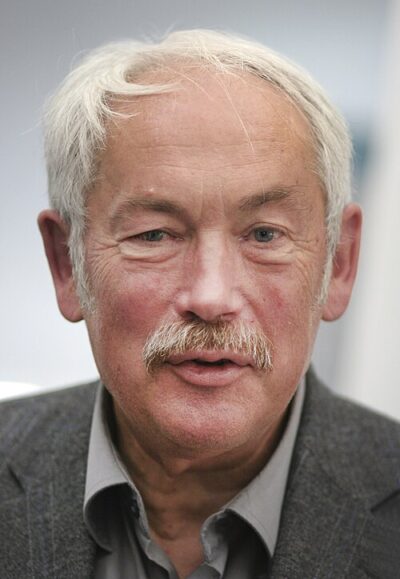
Forschungszentrum Jülich
Forschungszentrum Jülich is an interdisciplinary research centre in Germany. It was founded in 1956.
- Founded
- December 11, 1956
- Headquarters
- Jülich
- Country
- Germany
All 11 facts, and where they come from
Facts
11 facts · 0 confirmed by two sources · 5 cited · 6 from one source
Where this comes from
Papalocal keeps its own record. It started from these sources; what each one said is kept here as it was copied, so a change on their side never changes this page by itself. Tap one to read its version.
What Wikidata says · copied November 17, 2026 · revision 2569621202
- Described as
- interdisciplinary research centre in Germany
- Other names
- FJZ, Research Center Jülich, FZJ
- What it is
- research institute; open-access publisher · 1 reference; organization
- Founded
- December 11, 1956
- Headquarters
- Jülich · 1 reference
- Located in
- Jülich · 1 reference
- Country
- Germany · 3 references
- Part of
- Helmholtz Association of German Research Centres · 1 reference
- Owned by
- Germany · 1 reference; North Rhine-Westphalia · 1 reference
- Official website
- https://www.fz-juelich.de/
- Wikipedias with a page
- 16
Wikidata item Q697111 (wikidata.org/wiki/Q697111), public domain (CC0). Copied 2026-11-17.
What Wikipedia says · copied November 17, 2026 · revision 1380387553
Forschungszentrum Jülich GmbH (FZJ; lit. “Jülich Research Centre Limited Liability Company”) is a private company as part of Helmholtz Association with strong national funding that pursues interdisciplinary research in the fields of energy, information, and bioeconomy. It operates a broad range of research infrastructures like supercomputers, an atmospheric simulation chamber, electron microscopes, a particle accelerator, cleanrooms for nanotechnology, among other things. Current research priorities include the structural change in the Rhineland lignite-mining region, hydrogen, and quantum technologies. As a member of the Helmholtz Association with roughly 6,800 employees in ten institutes and 80 subinstitutes, Jülich is one of the largest research institutions in Europe.
Forschungszentrum Jülich's headquarters are located between the cities of Aachen, Cologne, and Düsseldorf on the outskirts of the North Rhine-Westphalian town of Jülich. FZJ has 15 branch offices in Germany and abroad, including eight sites at European and international neutron and synchrotron radiation sources, two joint institutes with the University of Münster, Friedrich-Alexander Universität Erlangen-Nürnberg (FAU), and Helmholtz-Zentrum Berlin (HZB), and three offices of Project Management Jülich (PtJ) in the cities of Bonn, Rostock, and Berlin. Jülich cooperates closely with RWTH Aachen University within the Jülich Aachen Research Alliance (JARA).
The institution was established on 11 December 1956 by the state of North Rhine-Westphalia as a registered association before it was renamed Nuclear Research Centre Jülich in 1967. In 1990, its name was changed to "Forschungszentrum Jülich GmbH".
From the Wikipedia article “Forschungszentrum Jülich” (en.wikipedia.org/wiki/Forschungszentrum_Jülich), by its contributors, under CC BY-SA 4.0 (creativecommons.org/licenses/by-sa/4.0/). Copied 2026-11-17; not changed.
Confirmed Two sources agree. Cited One source, and it names where it got it. One source One source, without a reference of its own. Sources disagree The sources disagree. We show the best-supported value and keep theirs below.
Picture: Wikimedia Commons: ForschzJülich.jpg · See Commons file page