Foy–Breguet telegraph
Foy–Breguet telegraph is a type of telegraph.
All 1 facts, and where they come from
Facts
1 facts · 0 confirmed by two sources · 0 cited · 1 from one source
Where this comes from
Papalocal keeps its own record. It started from these sources; what each one said is kept here as it was copied, so a change on their side never changes this page by itself. Tap one to read its version.
What Wikidata says · copied November 18, 2026 · revision 2370292677
- Described as
- type of telegraph
- Other names
- French telegraph, Foy-Bréguet telegraph
- What it is
- needle telegraph
- Wikipedias with a page
- 4
Wikidata item Q65082448 (wikidata.org/wiki/Q65082448), public domain (CC0). Copied 2026-11-18.
What Wikipedia says · copied November 18, 2026 · revision 1374373085
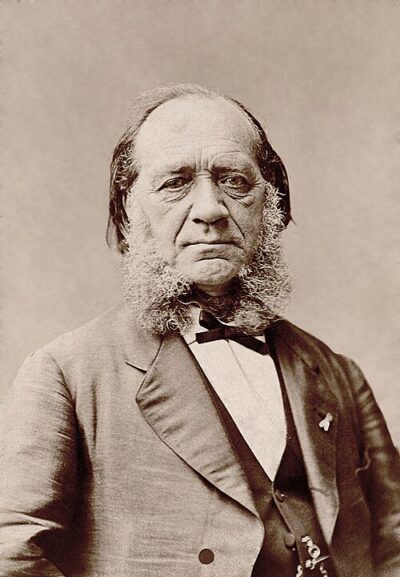
The Foy–Breguet telegraph, also called the French telegraph, was an electrical telegraph of the needle telegraph type developed by Louis-François-Clement Breguet and Alphonse Foy in the 1840s for use in France. The system used two-needle instruments that presented a display using the same code as that on the optical telegraph of Claude Chappe. The Chappe telegraph was extensively used in France by the government, so this arrangement was appealing to them as it meant there was no need to retrain operators.
Most needle telegraph systems moved the needles by means of an electromagnet driven by battery power applied to the line at the sending end. In contrast, the Foy-Breguet telegraph used electromagnets but they did not directly drive the needle. Instead, they operated the detent of a clockwork mechanism which released the needle to move on one position at a time.
The Chappe telegraph existed in some other countries, but no country besides France tried to duplicate the Chappe telegraph, or any other optical telegraph, as an electrical telegraph. Generally, each electrical telegraph system had a new code developed specifically to suit it. This was problematic for international communications, and in 1855 France abandoned the Foy–Breguet telegraph in favour of the Morse telegraph to bring them into line with the German–Austrian Telegraph Union. Many central European countries were members of this union and they had adopted the Morse system for better interoperability.
From the Wikipedia article “Foy–Breguet telegraph” (en.wikipedia.org/wiki/Foy–Breguet_telegraph), by its contributors, under CC BY-SA 4.0 (creativecommons.org/licenses/by-sa/4.0/). Copied 2026-11-18; not changed.
Confirmed Two sources agree. Cited One source, and it names where it got it. One source One source, without a reference of its own. Sources disagree The sources disagree. We show the best-supported value and keep theirs below.