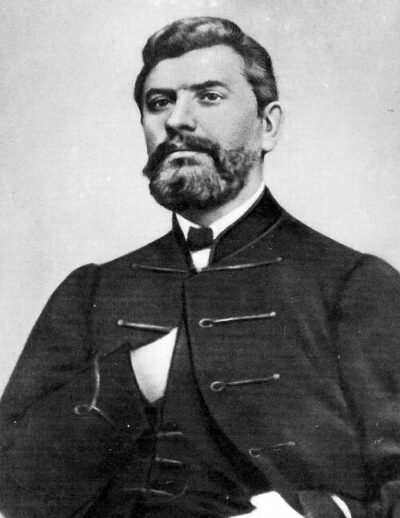
Frankists (Croatia)
Frankists (Croatia) is a political ideology. It was founded in 1895. It stands for Croatian nationalism.
- Founded
- 1895
- Ideology
- Croatian nationalism
All 4 facts, and where they come from
Facts
4 facts · 0 confirmed by two sources · 0 cited · 4 from one source
Where this comes from
Papalocal keeps its own record. It started from these sources; what each one said is kept here as it was copied, so a change on their side never changes this page by itself. Tap one to read its version.
What Wikidata says · copied November 17, 2026 · revision 2556400424
- Described as
- political ideology
- What it is
- political movement
- Founded
- 1895
- Ideology
- Croatian nationalism
- Named after
- Josip Frank
- Wikipedias with a page
- 6
Wikidata item Q12631225 (wikidata.org/wiki/Q12631225), public domain (CC0). Copied 2026-11-17.
What Wikipedia says · copied November 17, 2026 · revision 1384630724
Frankists (Croatian: frankovci) were the political party formed when a faction of the Party of Rights led by Josip Frank split from the rest of the organisation. The party was originally named the Pure Party of Rights (Čista stranka prava). It changed names several times, ultimately becoming the Croatian Party of Rights (Hrvatska stranka prava) in the final decade before it was banned in 1929. Historiography often refers to the party as the Frankists, after its original leader. The Frankists were a Croatian nationalist organisation whose declared objectives and strategies changed depending on political developments.
Initially the Frankists sought a reform of Austria-Hungary and revision of the Croatian–Hungarian Settlement of 1868 to achieve unification of the Kingdom of Croatia-Slavonia with variously defined Croatian lands to achieve a Greater Croatia that would enjoy an equal constitutional position in the Habsburg monarchy to that enjoyed by the Kingdom of Hungary. To that end, the Frankists tried to obtain support from a group close to Archduke Franz Ferdinand of Austria and adopted anti-Serbian policies, believing they would curry favour with the Austrian allies. The Frankists opposed a competing political option of emancipation of the South Slavs through unification outside Austria-Hungary in accordance with the ideology of Yugoslavism. The Frankists objected to the creation of Yugoslavia as the common state of the South Slavs, disputing the legality of the unification. From 1919 on, the party advocated the use of legal means to achieve Croatia's independence, seeking assistance from fascist Italy in return for political and territorial concessions.
In the 1920s, the Frankists initially cooperated with the Croatian Peasant Party of Stjepan Radić before unsuccessfully seeking allies among Serb-dominated political parties to challenge them from the dominant position in the political life of Croatia. In the same period, the Frankists developed the so-called culture of defeat. It entailed emphasising the moral superiority of wartime sacrifice as a prerequisite for a future redemption of the First World War defeat. In the 1930s, Ante Pavelić used the same concept as a basis for founding the Ustaše movement.
From the Wikipedia article “Frankists (Croatia)” (en.wikipedia.org/wiki/Frankists_(Croatia)), by its contributors, under CC BY-SA 4.0 (creativecommons.org/licenses/by-sa/4.0/). Copied 2026-11-17; not changed.
Confirmed Two sources agree. Cited One source, and it names where it got it. One source One source, without a reference of its own. Sources disagree The sources disagree. We show the best-supported value and keep theirs below.