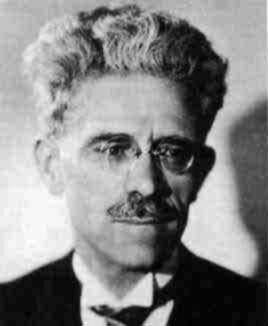
Fréchet inequalities
Fréchet inequalities is a logical inequalities.
All 3 facts, and where they come from
Facts
3 facts · 0 confirmed by two sources · 0 cited · 3 from one source
Where this comes from
Papalocal keeps its own record. It started from these sources; what each one said is kept here as it was copied, so a change on their side never changes this page by itself. Tap one to read its version.
What Wikidata says · copied November 17, 2026 · revision 1960831893
- Described as
- logical inequalities
- Other names
- Frechet inequalities
- What it is
- theorem; inequality
- Named after
- Maurice René Fréchet
- Wikipedias with a page
- 1
Wikidata item Q5506660 (wikidata.org/wiki/Q5506660), public domain (CC0). Copied 2026-11-17.
What Wikipedia says · copied November 17, 2026 · revision 1316998057
In probabilistic logic, the Fréchet inequalities, also known as the Boole–Fréchet inequalities, are rules implicit in the work of George Boole and explicitly derived by Maurice Fréchet that govern the combination of probabilities about logical propositions or events logically linked together in conjunctions (AND operations) or disjunctions (OR operations) as in Boolean expressions or fault or event trees common in risk assessments, engineering design and artificial intelligence. These inequalities can be considered rules about how to bound calculations involving probabilities without assuming independence or, indeed, without making any dependence assumptions whatsoever. The Fréchet inequalities are closely related to the Boole–Bonferroni–Fréchet inequalities, and to Fréchet bounds.
If Ai are logical propositions or events, the Fréchet inequalities areProbability of a logical conjunction (∧) max(0,∑k=1nℙ(Ak)−(n−1))≤ℙ(⋀k=1nAk)≤mink{ℙ(Ak)},
Probability of a logical disjunction (∨) maxk{ℙ(Ak)}≤ℙ(⋁k=1nAk)≤min(1,∑k=1nℙ(Ak)),
where P( ) denotes the probability of an event or proposition. In the case where there are only two events, say A and B, the inequalities reduce toProbability of a logical conjunction (∧) max(0,ℙ(A)+ℙ(B)−1)≤ℙ(A∧B)≤min(ℙ(A),ℙ(B)),
Probability of a logical disjunction (∨) max(ℙ(A),ℙ(B))≤ℙ(A∨B)≤min(1,ℙ(A)+ℙ(B)).
The inequalities bound the probabilities of the two kinds of joint events given the probabilities of the individual events. For example, if A is "has lung cancer", and B is "has mesothelioma", then A & B is "has both lung cancer and mesothelioma", and A ∨ B is "has lung cancer or mesothelioma or both diseases", and the inequalities relate the risks of these events.
Note that logical conjunctions are denoted in various ways in different fields, including AND, &, ∧ and graphical AND-gates. Logical disjunctions are likewise denoted in various ways, including OR, |, ∨, and graphical OR-gates. If events are taken to be sets rather than logical propositions, the set-theoretic versions of the Fréchet inequalities areProbability of an intersection of events max(0,ℙ(A)+ℙ(B)−1)≤ℙ(A∩B)≤min(ℙ(A),ℙ(B)),
Probability of a union of events max(ℙ(A),ℙ(B))≤ℙ(A∪B)≤min(1,ℙ(A)+ℙ(B)).
From the Wikipedia article “Fréchet inequalities” (en.wikipedia.org/wiki/Fréchet_inequalities), by its contributors, under CC BY-SA 4.0 (creativecommons.org/licenses/by-sa/4.0/). Copied 2026-11-17; not changed.
Confirmed Two sources agree. Cited One source, and it names where it got it. One source One source, without a reference of its own. Sources disagree The sources disagree. We show the best-supported value and keep theirs below.