
Free German Youth
Free German Youth is an East German political youth organization, founded in 1946 as a state mass organization, since 1990 only a small association. Its headquarters are in Karl-Liebknecht-Haus. It stands for Marxism–Leninism.
- Founded
- March 7, 1946
- Headquarters
- Karl-Liebknecht-Haus
- Country
- East Germany (–1990)
All 8 facts, and where they come from
Facts
8 facts · 0 confirmed by two sources · 1 cited · 7 from one source
Where this comes from
Papalocal keeps its own record. It started from these sources; what each one said is kept here as it was copied, so a change on their side never changes this page by itself. Tap one to read its version.
What Wikidata says · copied November 17, 2026 · revision 2555289279
- Described as
- East German political youth organization, founded in 1946 as a state mass organization, since 1990 only a small association
- Other names
- Freie Deutsche Jugend, FDJ
- What it is
- juvenile political organization; mass movement in the German Democratic Republic
- Founded
- March 7, 1946 · 1 reference
- Headquarters
- Karl-Liebknecht-Haus
- Country
- East Germany (–1990); Germany
- Ideology
- Marxism–Leninism
- Official website
- https://www.fdj.de/
- Wikipedias with a page
- 25
Wikidata item Q76845 (wikidata.org/wiki/Q76845), public domain (CC0). Copied 2026-11-17.
What Wikipedia says · copied November 17, 2026 · revision 1386070424
The Free German Youth (German: Freie Deutsche Jugend; FDJ) is a youth movement in Germany. Formerly, it was the official youth wing of the German Democratic Republic (GDR) and the Socialist Unity Party of Germany.
The organization was meant for young adults, both male and female, between the ages of 14 and 25 and comprised about 75% of the young adult population of former East Germany. In 1981–1982, this meant 2.3 million members. After joining the Thälmann Pioneers, which was for school children between ages 6 to 13, East German youths typically joined the FDJ.
The FDJ aimed to be the "reliable assistant and fighting reserve of the Worker's Party", while Socialist Unity Party of Germany was a member of the National Front and had representatives in the People's Chamber. The political and ideological goal of the FDJ was to influence every aspect of life of young people in the GDR, distribute Marxist–Leninist teachings and promote communist behavior. Membership in the FDJ was nominally voluntary. However, those who did not join lost access to organized holidays, and found it difficult (if not impossible) to be admitted to universities, pursue chosen careers, etc. The majority of youths who refused to join did so for religious reasons.
While the movement was intended to promote the Marxist–Leninist ideology among the young adults of East Germany, it did not concentrate on this to the exclusion of other activities. It arranged thousands of holidays for young adults through its Jugendtourist agency and ran discos and open-air rock concerts. The Festival of Political Songs was an officially sponsored event from 1970 to 1990. West Germany banned the FDJ since 1954, while the FDJ is allowed to operate legally in modern Germany.
From the Wikipedia article “Free German Youth” (en.wikipedia.org/wiki/Free_German_Youth), by its contributors, under CC BY-SA 4.0 (creativecommons.org/licenses/by-sa/4.0/). Copied 2026-11-17; not changed.
Confirmed Two sources agree. Cited One source, and it names where it got it. One source One source, without a reference of its own. Sources disagree The sources disagree. We show the best-supported value and keep theirs below.
People connected 3
Members
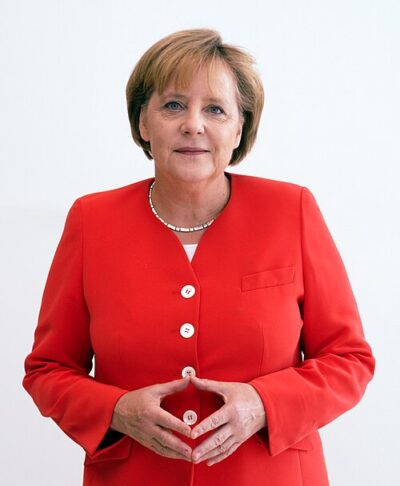 Angela Merkelchancellor of Germany from 2005 to 2021 (born 1954)
 Katrin Göring-EckardtGerman politician

