Friday Night Lights
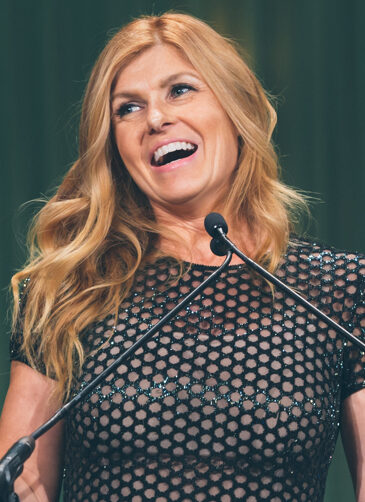
Friday Night Lights is a TV series. It was created by Peter Berg. It stars Kyle Chandler, Connie Britton and Gaius Charles. It is based on Friday Night Lights: A Town, a Team, and a Dream.
- Created by
- Peter Berg
- Genre
- drama television series
- Country of origin
- United States
All 19 facts, and where they come from
Facts
19 facts · 0 confirmed by two sources · 2 cited · 17 from one source
Where this comes from
Papalocal keeps its own record. It started from these sources; what each one said is kept here as it was copied, so a change on their side never changes this page by itself. Tap one to read its version.
What Wikidata says · copied November 16, 2026 · revision 2568844418
- Described as
- TV series
- What it is
- television series
- Created by
- Peter Berg
- Music by
- W. G. Snuffy Walden · 1 reference
- Starring
- Kyle Chandler; Connie Britton; Gaius Charles; Zach Gilford; Minka Kelly; Adrianne Palicki; Taylor Kitsch; Jesse Plemons; Scott Porter; Aimee Teegarden
- Genre
- drama television series
- Original language
- English · 1 reference
- Country of origin
- United States · 1 reference
- Based on
- Friday Night Lights: A Town, a Team, and a Dream
- Sport
- American football
- Official website
- http://www.nbc.com/friday-night-lights/
- Wikipedias with a page
- 18
Wikidata item Q4507 (wikidata.org/wiki/Q4507), public domain (CC0). Copied 2026-11-16.
What Wikipedia says · copied November 16, 2026 · revision 1385401542
Friday Night Lights is an American sports drama television series developed by Peter Berg and inspired by a 1990 book of immersive journalism by H. G. Bissinger, which was adapted as the 2004 film by Berg. Executive producers were Brian Grazer, David Nevins, Sarah Aubrey, and Jason Katims who also served as showrunner. The series follows a high school football team in the fictional town of Dillon, a small, close-knit community in rural West Texas. It features an ensemble cast led by Kyle Chandler and Connie Britton, portraying new high school football coach Eric Taylor and his wife Tami Taylor, who becomes the high school guidance counselor. The primary cast includes characters associated with football and high school. The show uses its small-town backdrop to address many issues in contemporary American culture like family values, school funding, racism, substance use, abortion, and lack of economic opportunities.
Friday Night Lights premiered on October 3, 2006. It aired for two seasons on NBC. In May 2007, the series was renewed for a second season to consist of 22 episodes, but due to the writers' strike, it was shortened to 15 episodes. Although the show had garnered critical acclaim and passionate fans, the series suffered low ratings and was in danger of cancellation after the second season. To save the series, NBC struck a deal with DirecTV to co-produce three more seasons; each subsequent season premiered on DirecTV's 101 Network, with NBC rebroadcasts a few months later. The series ended its run on The 101 Network on February 9, 2011, after five seasons.
Though Friday Night Lights never garnered a sizable audience, it received critical acclaim, lauded for its realistic portrayal of Middle America and deep exploration of its central characters. The show appeared on a number of best lists and was awarded a Peabody Award, a Humanitas Prize, a Television Critics Association Award and several technical Primetime Emmy Awards. At the 2011 Primetime Emmy Awards, the show was nominated for Outstanding Drama Series. Kyle Chandler and Connie Britton also scored multiple nominations for the Outstanding Lead Actor and Actress awards for a drama series. Executive producer Jason Katims was nominated for Outstanding Writing for a Drama Series. Chandler and Katims each won the Emmy in 2011.
From the Wikipedia article “Friday Night Lights (TV series)” (en.wikipedia.org/wiki/Friday_Night_Lights_(TV_series)), by its contributors, under CC BY-SA 4.0 (creativecommons.org/licenses/by-sa/4.0/). Copied 2026-11-16; not changed.
Confirmed Two sources agree. Cited One source, and it names where it got it. One source One source, without a reference of its own. Sources disagree The sources disagree. We show the best-supported value and keep theirs below.