

Fruitbearing Society
The Fruitbearing Society is a German literary society (1617–1680). It was founded by Louis I, Prince of Anhalt-Köthen and Kaspar Teutleben. Its headquarters are in Weimar.
- Founded
- August 24, 1617
- Founded by
- Louis I, Prince of Anhalt-Köthen
- Headquarters
- Weimar
- Country
- Holy Roman Empire
All 8 facts, and where they come from
Facts
8 facts · 0 confirmed by two sources · 3 cited · 5 from one source
Where this comes from
Papalocal keeps its own record. It started from these sources; what each one said is kept here as it was copied, so a change on their side never changes this page by itself. Tap one to read its version.
What Wikidata says · copied November 17, 2026 · revision 2544500979
- Described as
- German literary society (1617–1680)
- What it is
- literary society; German language society (17th and 18th century) · 1 reference
- Founded
- August 24, 1617 · 1 reference
- Ended
- 1680 · 1 reference
- Founded by
- Louis I, Prince of Anhalt-Köthen; Kaspar Teutleben
- Headquarters
- Weimar
- Country
- Holy Roman Empire
- Wikipedias with a page
- 18
Wikidata item Q559186 (wikidata.org/wiki/Q559186), public domain (CC0). Copied 2026-11-17.
What Wikipedia says · copied November 17, 2026 · revision 1348813022
The Fruitbearing Society (German Die Fruchtbringende Gesellschaft, lat. Societas Fructifera) was a German literary society founded in 1617 in Weimar by German scholars and nobility. Its aim was to standardize vernacular German and promote it as both a scholarly and literary language, after the pattern of the Accademia della Crusca in Florence and similar groups already thriving in Italy, followed in later years also in France (1635) and Britain.
It was also known as the Palmenorden ("Palm Order") because its emblem was the then-exotic fruitbearing date palm. Caspar von Teutleben (1576–1629), Hofmarschall at the court in Weimar, was the founding father of the society. As a young man he had travelled Italy and got inspired by the Italian language academies. During the funeral celebrations of Duchess Dorothea Maria in August 1617 which were attended by several princes he took the opportunity to propose the founding of a society following the example of the Italian Accademia della Crusca. Particularly Prince Ludwig von Anhalt-Köthen who already had joined the Accademia della Crusca in 1600 took hold of the idea and became the first president of the Palm Order.
The society counted a king (Charles X Gustav of Sweden), 153 Germanic princes, and over 60 barons, nobles, and distinguished scholars among its members. It disbanded in 1668.
The first book about the Palm Order, Der Teutsche Palmbaum, was written by Carl Gustav von Hille and published in Nuremberg in 1647.
From the Wikipedia article “Fruitbearing Society” (en.wikipedia.org/wiki/Fruitbearing_Society), by its contributors, under CC BY-SA 4.0 (creativecommons.org/licenses/by-sa/4.0/). Copied 2026-11-17; not changed.
Confirmed Two sources agree. Cited One source, and it names where it got it. One source One source, without a reference of its own. Sources disagree The sources disagree. We show the best-supported value and keep theirs below.
Picture: Wikimedia Commons: Fruchtbringende Gesellschaft.jpg · See Commons file page
People connected 13
Members
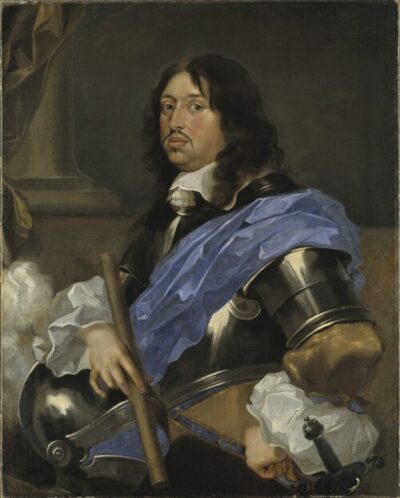 Charles X Gustav of SwedenKing of Sweden (1622-1660)
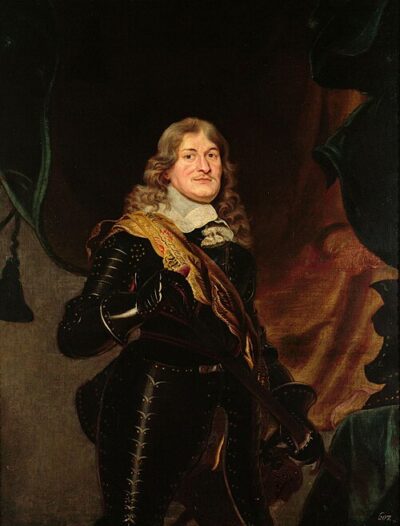 Frederick William of BrandenburgElector of Brandenburg and Duke of Prussia
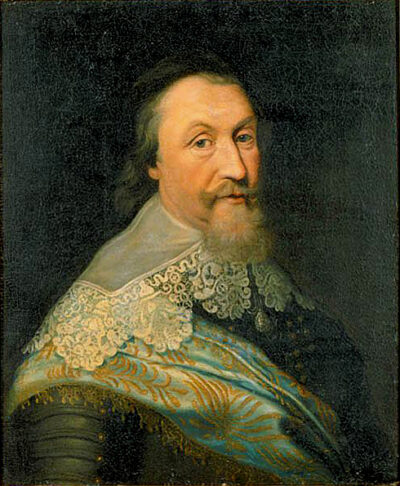 Axel OxenstiernaSwedish statesman (1583-1654)
 Andreas Gryphius (1662–)German poet and dramatist (1616–1664)
 Martin OpitzGerman poet
 George William, Elector of BrandenburgElector and Margrave of Brandenburg, Duke of Prussia
 Adam OleariusGerman writer, scholar and diplomat (1599-1671)
 Frederick III, Duke of Schleswig-Holstein-GottorpDuke of Schleswig-Holstein-Gottorp (1597-1659)
 Johannes Valentinus Andreae (1646–)German writer, mathematician and theologian (1586-1654)
 John George II, Elector of SaxonyElector of Saxony from 1656 to 1680
Carl Gustaf WrangelField Marshal of Sweden (1613-1676)
 George, Duke of Brunswick-Lüneburgfounder of the House of Hanover
 Maurice, Landgrave of Hesse-KasselLandgrave of Hesse-Kassel, musician (1572-1632)
