

Galois theory
Galois theory is a branch of mathematics that studies automorphism groups of fields.
All 2 facts, and where they come from
Facts
2 facts · 0 confirmed by two sources · 0 cited · 2 from one source
Where this comes from
Papalocal keeps its own record. It started from these sources; what each one said is kept here as it was copied, so a change on their side never changes this page by itself. Tap one to read its version.
What Wikidata says · copied November 17, 2026 · revision 2542199361
- Described as
- branch of mathematics that studies automorphism groups of fields
- What it is
- mathematical theory
- Named after
- Évariste Galois
- Wikipedias with a page
- 48
Wikidata item Q92552 (wikidata.org/wiki/Q92552), public domain (CC0). Copied 2026-11-17.
What Wikipedia says · copied November 17, 2026 · revision 1382295020
In mathematics, Galois theory, originally introduced by Évariste Galois, provides a connection between field theory and group theory. This connection, the fundamental theorem of Galois theory, allows reducing certain problems in field theory to group theory, which makes them simpler and easier to understand.
Galois introduced the subject for studying roots of polynomials. This allowed him to characterize the polynomial equations that are solvable by radicals in terms of properties of the permutation group of their roots—an equation is by definition solvable by radicals if its roots may be expressed by a formula involving only integers, nth roots, and the four basic arithmetic operations. This widely generalizes the Abel–Ruffini theorem, which asserts that a general polynomial of degree at least five cannot be solved by radicals.
Galois theory has been used to solve classic problems including showing that two problems of antiquity cannot be solved as they were stated (doubling the cube and trisecting the angle), and characterizing the regular polygons that are constructible (this characterization was previously given by Gauss but without the proof that the list of constructible polygons was complete; all known proofs that this characterization is complete require Galois theory).
Galois' work was published by Joseph Liouville fourteen years after his death. The theory took longer to become popular among mathematicians and to be well understood.
Galois theory has been generalized to Galois connections and Grothendieck's Galois theory.
From the Wikipedia article “Galois theory” (en.wikipedia.org/wiki/Galois_theory), by its contributors, under CC BY-SA 4.0 (creativecommons.org/licenses/by-sa/4.0/). Copied 2026-11-17; not changed.
Confirmed Two sources agree. Cited One source, and it names where it got it. One source One source, without a reference of its own. Sources disagree The sources disagree. We show the best-supported value and keep theirs below.
Picture: Wikimedia Commons: Lattice diagram of Q adjoin the positive square roots of 2 and 3, its subfields, and Galois groups.svg · See Commons file page
People connected 3
Field
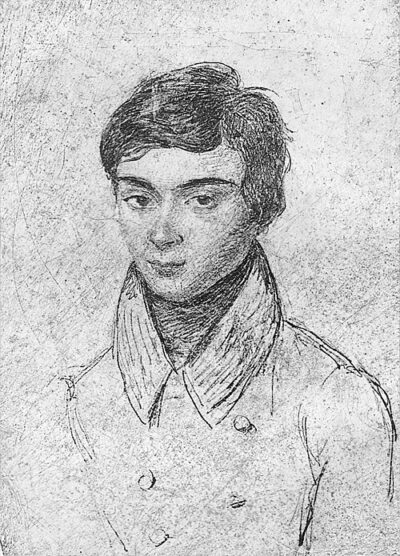 Évariste GaloisFrench mathematician (1811-1832)
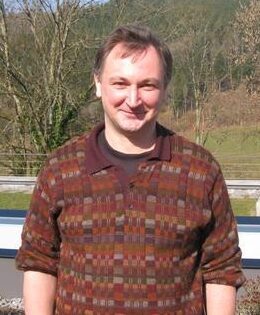 Vladimir VoevodskyRussian mathematician (1966–2017)
 Igor ShafarevichSoviet and Russian mathematician (1923-2017)
