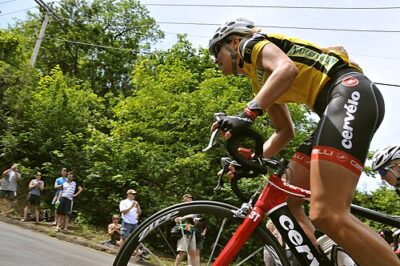
Garmin-Cervélo
Garmin-Cervélo is women's cycling team. It was founded in 2005.
- Sport
- road bicycle racing
- Founded
- 2005
All 6 facts, and where they come from
Facts
6 facts · 0 confirmed by two sources · 0 cited · 6 from one source
Where this comes from
Papalocal keeps its own record. It started from these sources; what each one said is kept here as it was copied, so a change on their side never changes this page by itself. Tap one to read its version.
What Wikidata says · copied November 17, 2026 · revision 2303016466
- Described as
- women's cycling team
- Other names
- Garmin-Cervelo
- What it is
- UCI Women's Team
- Founded
- 2005
- Ended
- 2011
- Country
- Switzerland (2005–2008); Germany (2009)
- Sport
- road bicycle racing
- Wikipedias with a page
- 9
Wikidata item Q1494332 (wikidata.org/wiki/Q1494332), public domain (CC0). Copied 2026-11-17.
What Wikipedia says · copied November 17, 2026 · revision 1373565918
Garmin–Cervélo was an elite professional women's cycling team registered in Great Britain and racing on the UCI Women's Road World Cup circuit. The team was previously known was Cervélo-Lifeforce Pro Cycling Team, but in 2009, with the creation of the UCI Professional Continental team Cervélo TestTeam, the women's team changed names to match the men's team. When the men's Cervélo TestTeam merged with Garmin–Transitions for the 2011 season, the team changed names again, becoming Garmin–Cervélo to again match the men's team. In 2007, the team was known as Raleigh-Lifeforce-Creation and prior to 2007, the team was known as the Univega Pro Cycling Team.
The Garmin–Cervélo women's team disbanded at the end of 2011 due to funding problems. Six of its ten riders, including all four Britons, transferred to the AA Drink–leontien.nl team for the 2012 season.
From the Wikipedia article “Garmin–Cervélo (women)” (en.wikipedia.org/wiki/Garmin–Cervélo_(women)), by its contributors, under CC BY-SA 4.0 (creativecommons.org/licenses/by-sa/4.0/). Copied 2026-11-17; not changed.
Confirmed Two sources agree. Cited One source, and it names where it got it. One source One source, without a reference of its own. Sources disagree The sources disagree. We show the best-supported value and keep theirs below.
Picture: Wikimedia Commons: Podium of the 2009 Netherlands national time trial championships (cropped).jpg · See Commons file page