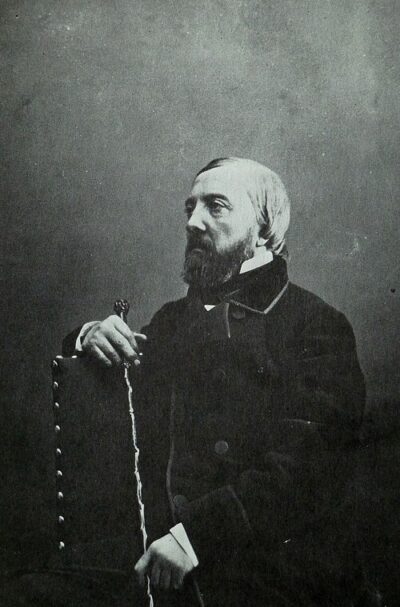
Gazette des beaux-arts
Gazette des beaux-arts is a periodical literature. It was founded in 1859.
- Founded
- 1859
- Country
- France
All 6 facts, and where they come from
Facts
6 facts · 0 confirmed by two sources · 2 cited · 4 from one source
Where this comes from
Papalocal keeps its own record. It started from these sources; what each one said is kept here as it was copied, so a change on their side never changes this page by itself. Tap one to read its version.
What Wikidata says · copied November 19, 2026 · revision 2516821555
- Described as
- periodical literature
- Other names
- Gazette des beaux-arts: courrier européen de l’art et de la curiosité, Gazette of Fine Arts, Fine Arts Gazette
- What it is
- periodical
- Language
- French · 1 reference
- Country of origin
- France · 1 reference
- Founded
- 1859
- Ended
- 2002
- Country
- France
- Wikipedias with a page
- 9
Wikidata item Q1287286 (wikidata.org/wiki/Q1287286), public domain (CC0). Copied 2026-11-19.
What Wikipedia says · copied November 19, 2026 · revision 1364966085
The Gazette des Beaux-Arts was a French art review, founded in 1859 by Édouard Houssaye, with Charles Blanc as its first chief editor. Assia Visson Rubinstein was chief editorial secretary under the direction of George Wildenstein from 1936 until 1960. Her papers, which include all editions of the Gazette from this period, are intact at the Cantonal and University Library of Lausanne in Dorigny. The Gazette was a world reference work on art history for nearly 100 years - one other editor in chief, from 1955 to 1987, was Jean Adhémar. It was bought in 1928 by the Wildenstein family, whose last representative was Daniel Wildenstein, its director from 1963 until his death in 2001. The magazine was published monthly and was headquartered in Paris. The review closed in 2002.
From the Wikipedia article “Gazette des Beaux-Arts” (en.wikipedia.org/wiki/Gazette_des_Beaux-Arts), by its contributors, under CC BY-SA 4.0 (creativecommons.org/licenses/by-sa/4.0/). Copied 2026-11-19; not changed.
Confirmed Two sources agree. Cited One source, and it names where it got it. One source One source, without a reference of its own. Sources disagree The sources disagree. We show the best-supported value and keep theirs below.
Picture: Wikimedia Commons: Gazette des Beaux-Arts.jpg · See Commons file page