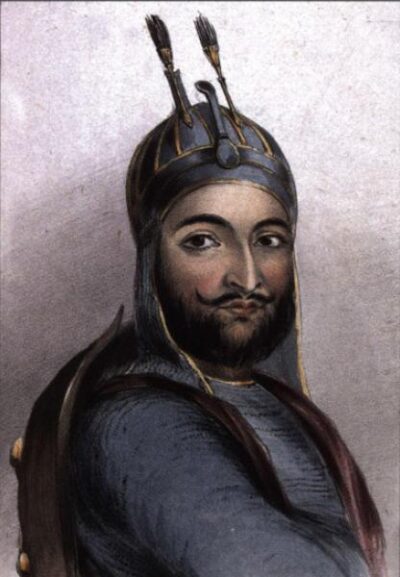
gazi
Gazi is an individual who participates in a battle or raiding [ghazw], often those of a religious origin or led by Muhammad.
- Country
- Ottoman Empire
All 4 facts, and where they come from
Facts
4 facts · 0 confirmed by two sources · 2 cited · 2 from one source
Where this comes from
Papalocal keeps its own record. It started from these sources; what each one said is kept here as it was copied, so a change on their side never changes this page by itself. Tap one to read its version.
What Wikidata says · copied November 17, 2026 · revision 2568057156
- Described as
- an individual who participates in a battle or raiding [ghazw], often those of a religious origin or led by Muhammad
- Other names
- ghazwa, ghazw
- What it is
- title of honor; military profession; denomination · 1 reference
- Country
- Ottoman Empire · 1 reference
- Wikipedias with a page
- 35
Wikidata item Q6128777 (wikidata.org/wiki/Q6128777), public domain (CC0). Copied 2026-11-17.
What Wikipedia says · copied November 17, 2026 · revision 1384742360
A ghazi (or gazi ; Arabic: غازي ghāzī [ɣaːˈziː], pl. ghuzāt) is an individual who participated in a ghazwa (غَزْو [ɣazw]) – a military expedition or raid against those whom they considered "Kafirs". Early Islamic literature characterised as ghazwa the expeditions led by the Islamic prophet Muhammad; later, Turkic military commanders used the word to refer to their wars of conquest.
In the context of the wars between Russia and the Muslim peoples of the Caucasus, starting as early as Sheikh Mansur's resistance to Russian expansion from 1785 to 1791, the word ghazwa usually appears in the form gazavat (Russian: газават).
In English-language literature, the word ghazw often appears as "razzia", a borrowing through French from Maghrebi Arabic.
In modern Turkish, the word gazi refers to veterans, and also (as a title) to Turkic Muslim champions such as Ertuğrul (Ertuğrul Ghazi) and Sultan Osman I (Osman Ghazi).
From the Wikipedia article “Ghazi (warrior)” (en.wikipedia.org/wiki/Ghazi_(warrior)), by its contributors, under CC BY-SA 4.0 (creativecommons.org/licenses/by-sa/4.0/). Copied 2026-11-17; not changed.
Confirmed Two sources agree. Cited One source, and it names where it got it. One source One source, without a reference of its own. Sources disagree The sources disagree. We show the best-supported value and keep theirs below.
Picture: Wikimedia Commons: Murad II and Władysław III of Poland.jpg · See Commons file page