
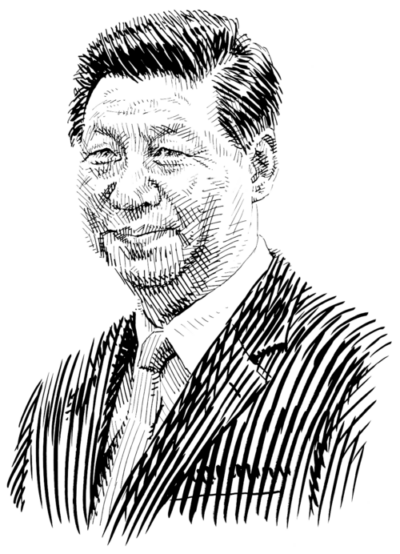
general secretaryship of Xi Jinping
General secretaryship of Xi Jinping is a Chinese authority headed by Communist Party General Secretary Xi Jinping.
- Country
- People's Republic of China
All 5 facts, and where they come from
Facts
5 facts · 0 confirmed by two sources · 0 cited · 5 from one source
Where this comes from
Papalocal keeps its own record. It started from these sources; what each one said is kept here as it was copied, so a change on their side never changes this page by itself. Tap one to read its version.
What Wikidata says · copied November 17, 2026 · revision 2485427919
- Described as
- Chinese authority headed by Communist Party General Secretary Xi Jinping
- Other names
- Xi Administration, Dictatorship of Xi Jinping, Xi Jinping Dictatorship, Core Xi, Core Xi Jinping, Xi Jinping Government, Xi Government, China under Xi Jinping, Xi Jinping Administration, Xi Jinping's CCP, General secretaryship of Xi Jinping, 习近平担任总书记的中国共产党
- What it is
- dictatorship; Leadership of the People's Republic of China; authoritarianism
- Country
- People's Republic of China
- Chair
- Xi Jinping
- Wikipedias with a page
- 7
Wikidata item Q52161605 (wikidata.org/wiki/Q52161605), public domain (CC0). Copied 2026-11-17.
What Wikipedia says · copied November 17, 2026 · revision 1386091060
Since 2012, the People's Republic of China has officially referred to its present era as the New Era of Socialism with Chinese Characteristics, which started when Xi Jinping succeeded Hu Jintao as general secretary of the Chinese Communist Party (CCP) following the 18th National Congress of the Chinese Communist Party. In 2016, Xi was proclaimed the CCP's fourth leadership core, following Mao Zedong, Deng Xiaoping, and Jiang Zemin.
While overseeing China's domestic policy, Xi has introduced far-ranging measures to enforce party discipline and strengthen internal unity. His anti-corruption campaign led to the downfall of prominent incumbent and retired CCP officials, including former PSC member Zhou Yongkang. For the sake of promoting "common prosperity", Under Xi, China has enacted a series of policies designed to increase equality, overseen targeted poverty alleviation programs as part of the battle against poverty, and directed a broad crackdown in 2021 against the tech sector, as well as drastically curtailing the tutoring industry and reducing homework burdens. Furthermore, China has expanded support for state-owned enterprises (SOEs), emphasized advanced manufacturing and tech development, advanced military-civil fusion, and attempted to reform the country's property sector. Following the onset of the COVID-19 pandemic in mainland China, the country initially responded with a zero-COVID policy from January 2020 to December 2022 before ultimately shifting towards a mitigation strategy after widespread protests occurred. In foreign policy, Xi emphasizes the Community of Common Destiny. He seeks to increase China's ability to shape international norms in emerging policy areas (described as "new frontiers") like space and the internet, where China can position itself as an early entrant. Xi also seeks to increase China's discourse power, which he frames as China's "right to speak." Since Xi came to power, China has pursued a more hardline foreign policy particularly with regard to China's relations with the United States, the nine-dash line in the South China Sea, and the Sino-Indian border dispute. Additionally, for the sake of advancing Chinese economic interests abroad, China has sought to expand its influence in Africa and Eurasia by championing the Belt and Road Initiative.
Relations between Beijing and Taipei deteriorated under Taiwanese president Tsai Ing-wen, successor of Ma Ying-jeou whom Xi met in 2015. In 2020, a national security law in Hong Kong was passed, which clamped down on political opposition in the city, especially pro-democracy activists. Since Xi came to power, China has witnessed a significant increase in censorship and mass surveillance, a deterioration in human rights (including the persecution of Uyghurs), the rise of a cult of personality, the removal of term limits for the presidency in 2018, as well as an increased role for the CCP in society. Xi's political ideas and principles, known as Xi Jinping Thought, have been incorporated into the party and national constitutions. As the central figure of the fifth generation of leadership of the PRC, Xi has centralized institutional power by taking on multiple positions, overseen significant reforms of Party, state and military bodies, while also increasing the CCP's influence over the state bodies.
From the Wikipedia article “General secretaryship of Xi Jinping” (en.wikipedia.org/wiki/General_secretaryship_of_Xi_Jinping), by its contributors, under CC BY-SA 4.0 (creativecommons.org/licenses/by-sa/4.0/). Copied 2026-11-17; not changed.
Confirmed Two sources agree. Cited One source, and it names where it got it. One source One source, without a reference of its own. Sources disagree The sources disagree. We show the best-supported value and keep theirs below.
Picture: 斉藤 高志, via Wikimedia Commons · CC BY 4.0
People connected 5
Members
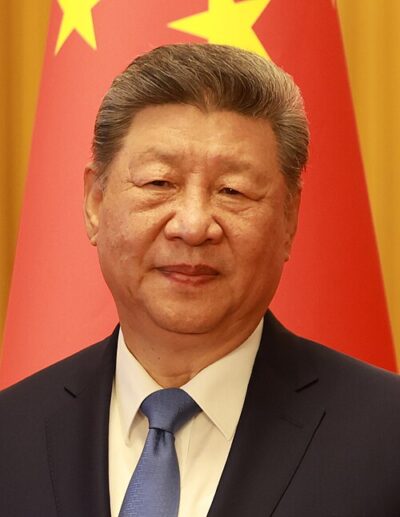 Xi JinpingGeneral Secretary of the Chinese Communist Party since 2012 (born 1953)
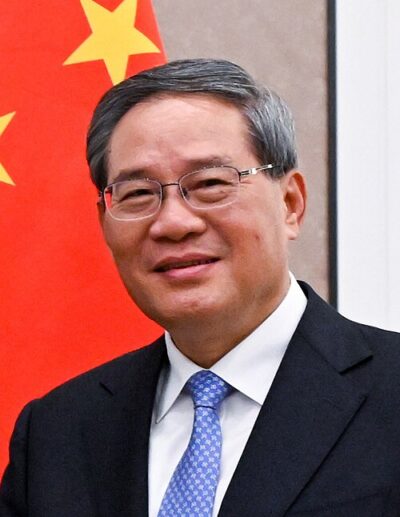 Li QiangPremier of the People's Republic of China since 2023
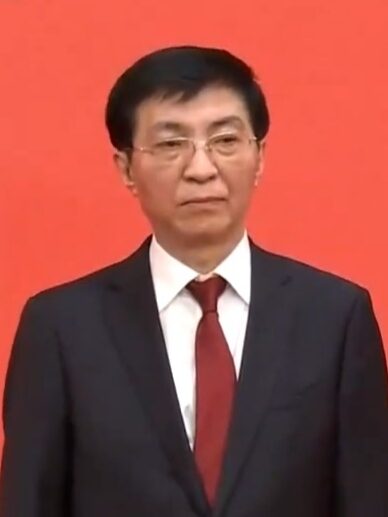 Wang HuningChairman of the Chinese People's Political Consultative Conference
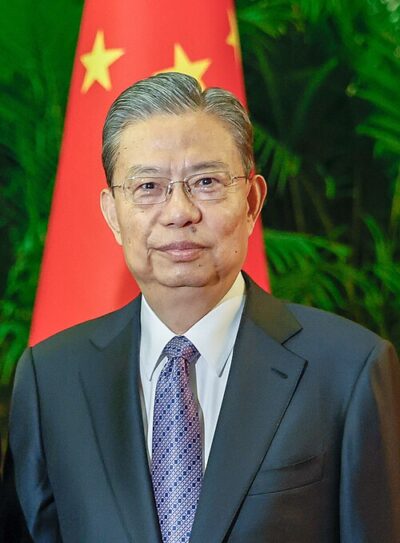 Zhao LejiChairman of the Standing Committee of the National People's Congress of the People's Republic of China
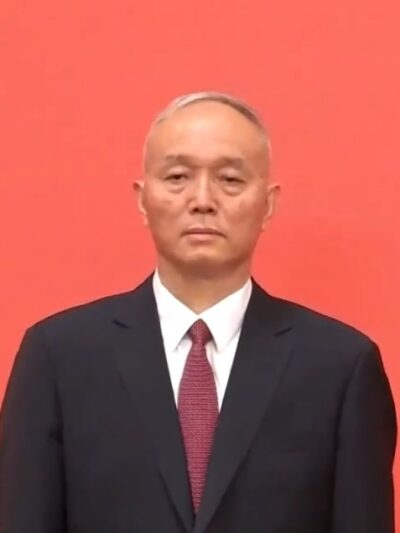 Cai QiFirst Secretary of the Secretariat of the Chinese Communist Party
